
Clear braces are designed to blend with your smile, but keeping them clean requires attention to oral hygiene and daily habits. In this guide, you will learn practical ways to prevent staining clear brackets and elastic bands, so your braces keep looking discreet throughout your treatment.
We will explain what clear braces are, why certain foods and drinks can stain the brackets, and how good oral care helps prevent discoloration. Whether you wear clear braces as an alternative to traditional metal braces or are considering ceramic braces to straighten your teeth, these tips to keep your braces clean will help you avoid staining and maintain confidence as orthodontic treatment progresses.
Understanding Clear Braces and Stains
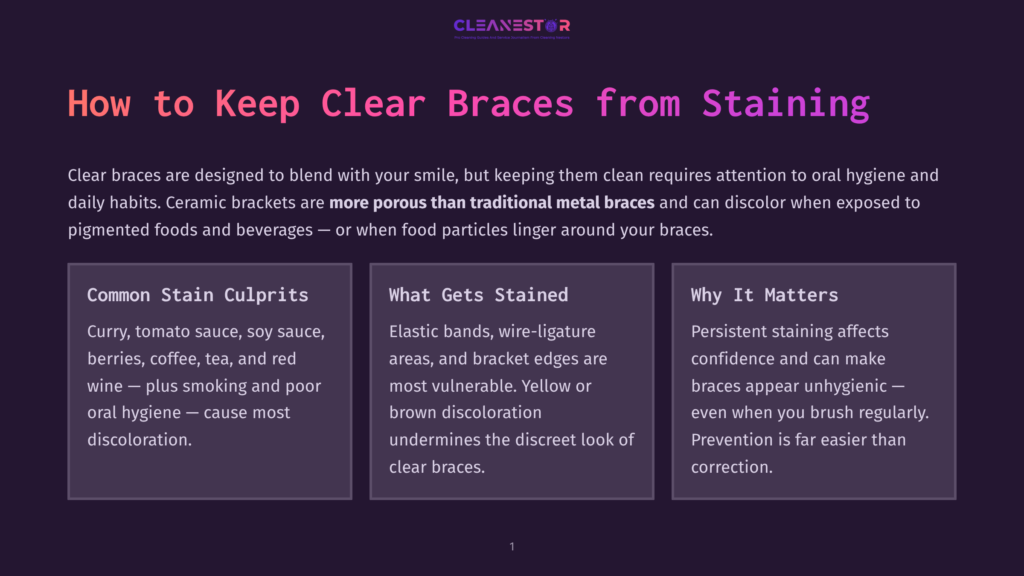
Understanding how and why clear braces stain is the first step to keeping them clean. Pigmented foods and beverages and lingering food particles cause most stains.
Compared with traditional braces, ceramic is more porous and may hold a stain if oral hygiene slips. Your orthodontist will emphasize brushing and flossing to help prevent yellow discoloration and to keep your clear braces from staining.
Knowing the role of diet, the properties of ceramic, and the importance of regular dental care allows you to choose ways to prevent staining and select habits that keep your braces looking clear throughout your treatment with clear braces.
What Are Clear Braces?
Clear braces are ceramic orthodontic appliances that use tooth-colored or translucent ceramic brackets to straighten your teeth with less visual impact than traditional metal braces. While clear braces are designed to be discreet, they still rely on wires, brackets, and elastic bands to guide teeth and braces into alignment.
Many patients choose ceramic braces as an alternative to traditional metal braces to keep their smile low-profile while they wear clear braces. Clear aligners are another option, but treatment with clear braces may be preferred for certain tooth movements.
Because ceramic can discolor, maintaining good oral hygiene—brush and floss thoroughly around your braces—becomes a key way to keep clear braces from staining and to prevent discoloration of ties and brackets.
Common Causes of Staining
Common causes of braces stain include pigmented foods and drinks (curry, tomato sauce, soy sauce, berries, tea, coffee). These foods and beverages can stain the brackets or more often the elastic bands, leading to yellow discoloration that makes clear braces stain more noticeable.
Food particles that remain around your braces after meals can also stain your braces by prolonging contact with pigments. Smoking and poor oral hygiene compound the problem, allowing plaque to hold pigments against ceramic brackets. Even certain foods that seem harmless can discolor elastics over time.
Recognizing which certain foods and drinks carry higher risk helps you avoid staining and choose ways to prevent staining throughout your orthodontic treatment.
Impact of Stains on Appearance
Stains can undermine the main advantage of clear braces by making ceramic brackets and elastic bands appear yellow or brown, causing discoloration that contrasts with teeth and braces. When clear braces stain, the brackets and ties reflect less light and the smile looks dull, drawing attention much like traditional metal braces. Persistent discoloration can also make braces looking less hygienic, even when you brush your teeth regularly.
While an orthodontist can replace elastic bands, repeated staining between visits can affect confidence throughout your treatment. Maintaining good oral habits—brush and floss diligently, clean around your braces, and manage foods and beverages—will help prevent discoloration, keep your clear braces discreet, and support the goal to straighten your teeth without compromising appearance.
Tips to Keep Clear Braces from Staining
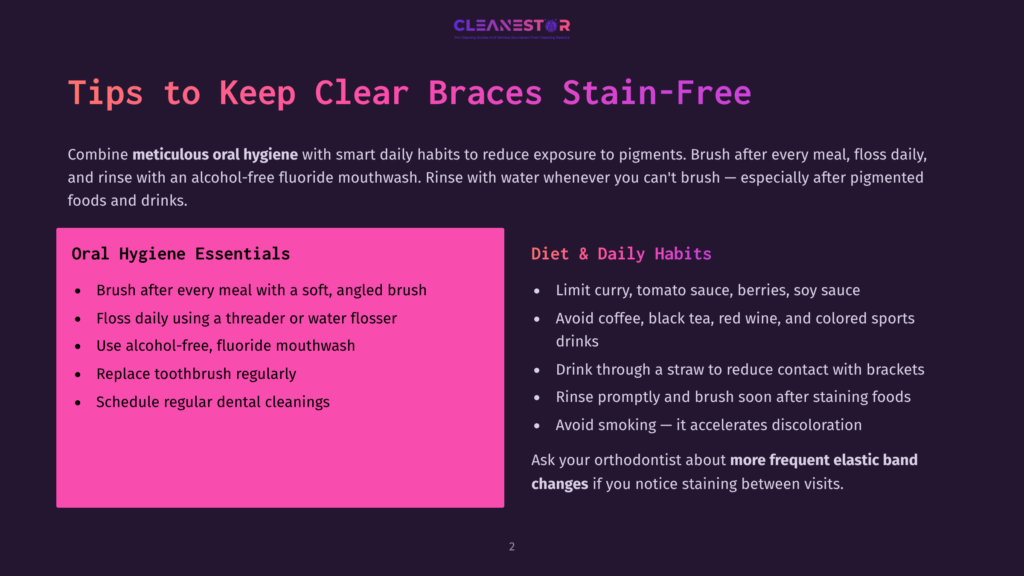
To keep clear braces from staining, combine meticulous oral hygiene with smart daily habits that reduce exposure to pigmented foods and beverages. Clear braces are designed to be discreet, but ceramic brackets and elastic bands can discolor when food particles linger around your braces.
Adopt tips to keep your braces clean, such as rinsing after meals, using fluoride toothpaste, and timing your brush and floss routine to remove pigments before they set. Limit certain foods known to stain the brackets, and be mindful when you drink coffee or tea.
Partner with your orthodontist for periodic checks during orthodontic treatment to help prevent yellow discoloration, replace elastics, and adjust your plan. Consistent practices throughout your treatment will help prevent staining and keep your clear braces looking clear.
Oral Hygiene Practices
Brush after every meal with a soft brush angled at the gumline and around your braces to sweep away food particles before they discolor ceramic or elastic bands. Floss daily using a threader or water flosser to reach between teeth and braces, where pigments accumulate and stain clear braces. Add an alcohol-free, fluoride mouthwash to help prevent plaque that can trap stains.
Rinse with water whenever you can’t brush, especially after pigmented foods and drinks. Replace your toothbrush regularly to maintain effective bristles. Schedule dental cleanings and follow your orthodontist’s guidance; professional care can help prevent discoloration and keep your braces clean throughout your treatment in orthodontics.
| Action | Purpose |
|---|---|
| Brush after every meal with a soft, angled brush | Removes food particles to prevent discoloration of ceramic or elastic bands |
| Floss daily with a threader or water flosser | Reaches between teeth and braces where pigments accumulate and stain clear braces |
| Use alcohol-free, fluoride mouthwash | Helps prevent plaque that can trap stains |
| Rinse with water when you can’t brush | Especially useful after pigmented foods and drinks to reduce staining |
| Replace your toothbrush regularly | Keeps bristles effective for thorough cleaning |
| Schedule dental cleanings and follow orthodontist’s guidance | Professional care helps prevent discoloration and keeps braces clean during treatment |
Foods and Beverages to Avoid
Certain foods and beverages can quickly stain your braces. Limit pigmented foods (curry, tomato sauce, soy sauce, berries) that can stain the brackets and elastics on ceramic braces. Be cautious when you drink coffee, black tea, red wine, and colored sports drinks; their dark chromogens and acids can cause yellow discoloration and clear braces stain.
Sauces and spices with strong colorants, as well as artificial dyes, can discolor elastics during orthodontic treatment. If you choose these foods and drinks, rinse promptly and brush soon after to prevent staining clear surfaces. Opt for lighter alternatives and drink through a straw when possible to reduce contact with teeth and braces. These diet adjustments are a practical way to keep clear braces from staining and prevent discoloration.
Best Practices for Wearing Clear Braces
When you wear clear braces, daily habits matter as much as brushing. Create a routine to brush and floss after meals, carry a travel kit, and rinse immediately after consuming staining foods and drinks. Avoid smoking, which accelerates discoloration.
Use orthodontic wax to prevent irritation that might discourage thorough cleaning around your braces. Ask your orthodontist about more frequent elastic band changes if you notice braces stain between visits. Hydrate often to wash away pigments and reduce plaque buildup.
If considering clear aligners as an alternative to traditional metal braces, remember that treatment with clear braces may be better for certain movements, but requires vigilance to keep them clean. With these ways to prevent staining, you will keep your clear braces discreet throughout your treatment.
Preventing Stains on Ceramic Braces
Preventing stains on ceramic braces starts with consistent oral hygiene and smart choices about foods and beverages. Ceramic brackets are more porous than traditional metal braces, so pigmented foods can stain the brackets and elastic bands if food particles linger around your braces.
To keep clear braces from staining, brush and floss after meals, rinse when you drink coffee or tea, and schedule regular dental visits so your orthodontist can replace ties and monitor discoloration. Clear braces are designed to be discreet, but they require diligence to keep them clean throughout your treatment.
By combining good oral routines with careful diet choices, you help prevent yellow discoloration, keep your braces looking clear, and support smooth orthodontic treatment as you straighten your teeth.
Understanding Ceramic Braces
Ceramic braces use tooth-colored ceramic brackets that blend with your smile while they straighten your teeth. Compared with traditional braces, ceramic can discolor more readily when exposed to pigmented foods and drinks, especially if plaque and food particles collect around your braces.
Although clear aligners are an alternative to traditional metal braces, treatment with clear braces may be recommended in orthodontics for precise control. Knowing where stains develop—on elastic bands, the wire-ligature area, and the edges of each bracket—helps you prevent staining clear components.
Clear braces are designed for aesthetics, but they demand a way to keep surfaces free of pigments: brush thoroughly, floss daily, and follow your orthodontist’s guidance to help prevent discoloration throughout your treatment.
Special Care for Ceramic Braces
Special care for ceramic braces focuses on protecting ceramic brackets and elastic bands from chromogens and acids. Brush and floss after meals, using a soft brush angled at 45 degrees to sweep under the wire and around your braces.
Choose a low-abrasive, fluoride toothpaste to keep them clean without scratching ceramic. Rinse immediately after pigmented foods and beverages, and whenever you drink coffee, use a straw to reduce contact with teeth and braces.
Avoid smoking and limit certain foods that easily stain clear braces. Ask your orthodontist about more frequent tie changes if you notice braces stain early. Carry a travel kit with interdental brushes to dislodge food particles. These tips to keep your braces clean will help prevent staining and keep your clear braces discreet.
| Practice | Purpose |
|---|---|
| Brush and floss after meals with a soft, 45°-angled brush | Removes debris under wires and around brackets |
| Use low-abrasive, fluoride toothpaste | Cleans without scratching ceramic surfaces |
| Rinse after pigmented foods; use a straw for coffee | Reduces staining and contact with braces |
| Avoid smoking and limit staining foods | Prevents discoloration of clear braces |
| Request more frequent tie changes if staining occurs | Helps keep elastic bands looking clear |
| Carry interdental brushes in a travel kit | Dislodges trapped food particles |
How to Clean Ceramic Braces Effectively
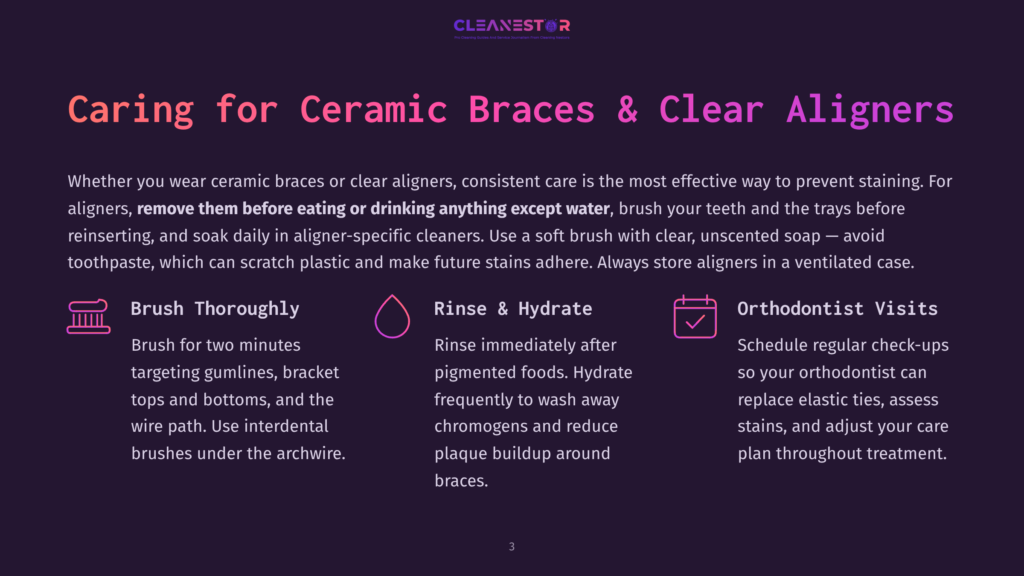
To clean ceramic braces effectively, start with a thorough brush-and-floss sequence. Brush for two minutes, targeting the gumline, the top and bottom of each bracket, and the wire path to remove plaque that can stain your braces.
Use interdental brushes to sweep under the archwire and between teeth and braces. Floss daily with a threader or water flosser to reach tight spaces where pigments accumulate and cause yellow discoloration. Rinse with an alcohol-free fluoride mouthwash to help prevent discoloration and strengthen enamel during orthodontic treatment.
After consuming pigmented foods and drinks, rinse promptly and brush as soon as practical. Schedule regular dental cleanings, and let your orthodontist assess any clear braces stain so elastic bands can be replaced. Consistency is the most effective way to keep clear braces from staining.
| Action | Purpose/Focus |
|---|---|
| Brush for two minutes | Target gumline, top/bottom of brackets, and wire path to remove plaque |
| Use interdental brushes | Sweep under the archwire and between teeth and braces |
| Floss daily | Reach tight spaces where pigments accumulate and cause yellow discoloration |
| Rinse with alcohol-free fluoride mouthwash | Help prevent discoloration and strengthen enamel |
| Rinse and brush after pigmented foods/drinks | Reduce staining from pigments |
| Schedule regular dental cleanings | Allow orthodontist to assess stains and replace elastic bands if needed |
| Be consistent | Most effective way to keep clear braces from staining |
Managing Stains on Clear Aligners
Clear aligners offer a discreet alternative to traditional metal braces, but they can still stain if oral hygiene and daily habits slip. Aligners sit closely against teeth and braces attachments, so pigmented foods and beverages can transfer color and cause yellow discoloration.
To keep them clean, treat aligners like clear braces: rinse after meals, brush your teeth before reinserting, and avoid certain foods and drinks while aligners are in. Good oral hygiene reduces food particles that discolor the trays and the composite attachments on each bracket-like nub.
During orthodontic treatment, your orthodontist can guide you on ways to prevent staining and help prevent persistent discoloration. With consistent care, you can keep your clear aligners fresh, avoid staining clear plastic, and support progress to straighten your teeth.
Identifying Stains on Clear Aligners
Aligner stains typically appear as yellow or brown haze, tea-colored tints, or cloudy patches that won’t rinse away. Unlike plaque, which feels sticky, discoloration from pigmented foods and beverages often looks uniform over the tray or concentrated near edges that trap food particles. If you drink coffee, black tea, or colored sports drinks with aligners in, you may notice clear braces stain–like rings near the gingival margin. Nicotine can add a smoky hue, while curry and tomato sauce can stain the brackets’ attachments and the tray’s inner surface. Inspect aligners under bright light after brushing; persistent marks signal the need to adjust habits and clean more consistently, and consult your orthodontist if attachments or elastic bands on auxiliary appliances begin to discolor.
Cleaning Techniques for Clear Aligners
To keep clear aligners clean, remove them before eating or drinking anything except water, then brush your teeth and the trays before reinserting. Use a soft brush and clear, unscented soap; avoid toothpaste on trays because abrasives can scratch ceramic-like plastic and make future stains adhere. Rinse aligners in cool water—hot water may distort fit and harm orthodontic treatment.
Soak daily in aligner-specific cleaners as a way to keep biofilm low and prevent staining; avoid colored mouthwashes that can stain your braces attachments and trays. Maintain good oral hygiene by brushing for two minutes and flossing to clear pigments around your braces attachments. These tips to keep aligners and teeth and braces surfaces clean will help prevent discoloration throughout your treatment.
Maintaining Freshness and Clarity
Maintaining clarity demands a routine that limits exposure to chromogens and keeps bacteria under control. Always store aligners in a ventilated case when not wearing braces to prevent odor buildup and reduce contamination.
Hydrate frequently to wash away pigments and help prevent staining from certain foods. Do not sip coffee, tea, or red wine with trays in; if you do, rinse immediately, then brush and floss before reinserting. Replace aligners on schedule so micro-scratches do not accumulate yellow discoloration.
Coordinate with your orthodontist for periodic checks; they can spot early discoloration on attachments and suggest ways to prevent staining. With consistent care, you will keep your clear braces alternative looking discreet, support good oral health, and keep your clear aligners from staining.
Teeth Whitening: Keeping Clear Braces Clear
As an Amazon Associate, Cleanestor earns from qualifying purchases at no additional cost to you.