
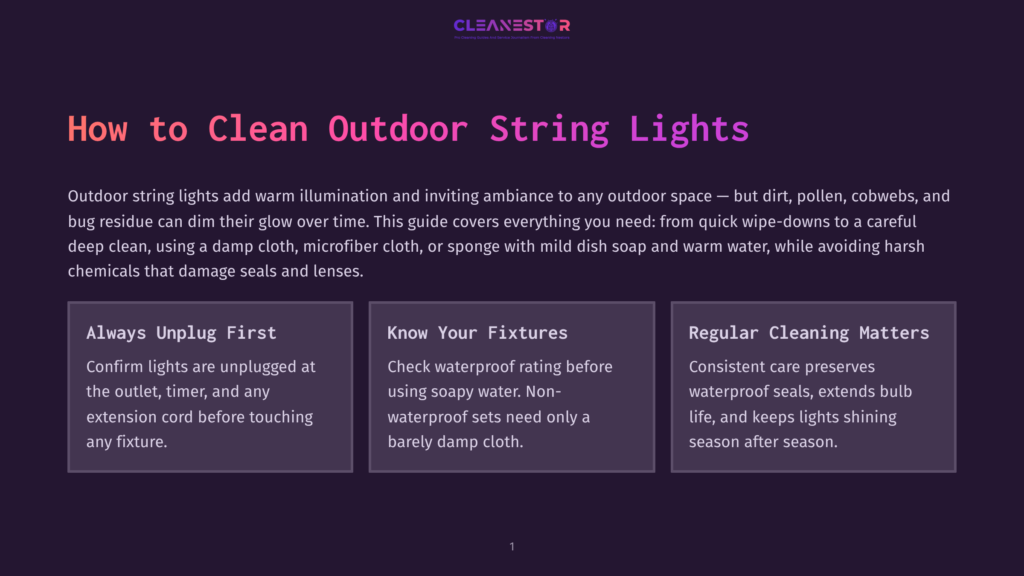
Outdoor string lights add warm illumination and inviting ambiance to any outdoor space, but to keep your outdoor light fixtures safe, bright, and reliable, you need a clear cleaning method. This guide explains how to clean outdoor string lights effectively, from quick wipe-downs to a careful deep clean, so you can remove dirt and grime, pollen, cobwebs, and bug residue without damage.
We will show you the right way to clean using a damp cloth, microfiber cloth, or sponge, when to unplug, what cleaner and dish soap to choose, and how to avoid using harsh chemicals. By learning how to clean your outdoor string lights the right way, you will keep them shining through harsh weather and pollution while protecting each bulb and casing.
Understanding Outdoor String Lights
Before you clean your outdoor string lights, it helps to understand their construction and how outdoor lighting endures harsh weather, loose dirt, and pollution. Each string includes a power line, sockets, and a light bulb or LEDs housed in a casing; some sets include a solar panel that requires separate care.
While many models are waterproof, the rating varies, so inspect fixtures to confirm waterproof level before using soapy water or only a damp cloth. Outdoor light designs differ: some bulbs are shatter-resistant, others are delicate and need a soft-bristled approach.
Knowing these details informs the safest cleaning method, what to avoid using, and how to gently wipe components to remove dirt without compromising seals that keep your outdoor lights protected.
What Are Outdoor String Lights?
Outdoor string lights are flexible lighting systems made of a continuous string with evenly spaced light fixtures, each fitted with a light bulb or integrated LEDs. Designed for patios, decks, and gardens, they deliver reliable illumination and ambiance while withstanding outdoor conditions. Many sets feature waterproof or weather-resistant casings, and some include a solar panel for off-grid power. Because outdoor string lights are exposed to dust, pollen, grime, cobwebs, and bug debris, regular cleaning is essential. The components you will handle when you clean outdoor string lights include the cord, sockets, bulb glass or plastic, and any protective casing. Understanding these parts helps you select a gentle cleaner, use a soft cloth or microfiber cloth, and avoid using abrasive actions that could damage the fixtures.
Benefits of Using Outdoor String Lights
Outdoor string lights add character to an outdoor space by providing soft illumination and a welcoming ambiance for gatherings. Beyond aesthetics, they improve visibility along pathways and seating areas, enhancing safety. Many models with LEDs or a solar panel reduce energy use and maintenance costs. With regular cleaning, you can keep your outdoor lights performing well and extend bulb life.
Clean your outdoor string lights to remove loose dirt and stubborn stains that otherwise dim the output. A consistent cleaning method—using dish soap with warm water and a damp cloth—helps fixtures remain clear and bright. Proper care also preserves waterproof seals on the casing, preventing moisture intrusion so you can keep them shining season after season.
Common Issues with Outdoor Lighting
Outdoor lighting faces harsh weather, pollution, and environmental debris, which leads to dust accumulation, pollen film, bug splatter, and cobweb buildup that obscure illumination. Stubborn grime around the casing and sockets can trap moisture, while residue on each bulb reduces brightness. Inadequate maintenance can also conceal cracks or frayed wiring you would otherwise inspect during regular cleaning.
When you clean your outdoor lights, ensure the lights are unplugged to avoid shock, and avoid using abrasive tools that scratch lenses. Tough stains may require a soft-bristled toothbrush, drops of mild dish soap in warm water, and a gentle wipe approach with a microfiber cloth. Avoid using harsh chemicals that degrade plastics or seals; instead, remove dirt methodically and let components completely dry to keep your outdoor system safe.
Preparing to Clean Your Outdoor String Lights
Preparation sets the stage for a safe, effective cleaning method that protects every fixture and bulb while restoring illumination and ambiance in your outdoor space. Before you clean your outdoor string lights, unplug the string and confirm the lights are unplugged at the outlet or controller. Inspect the cord, sockets, and any casing for cracks, frayed wiring, or loose dirt that could hide bigger issues.
Note whether your outdoor light set is waterproof and if it includes LEDs or a solar panel that needs separate attention. Plan a deep clean if you see stubborn stains, pollen film, cobwebs, or bug residue; otherwise, a quick gently wipe may suffice. Organize tools so you can remove dirt efficiently and keep your outdoor lighting protected and completely dry afterward.
Gathering Necessary Supplies
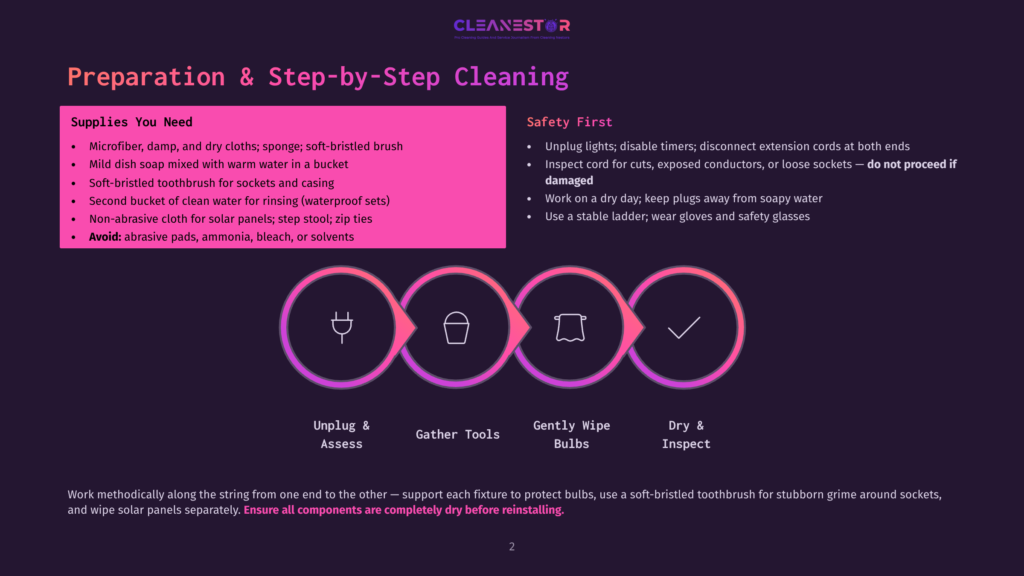
Gather the right tools to clean effectively without scratching. Use a microfiber cloth, a dry cloth, a damp cloth, a sponge, and a cloth or soft-bristled brush to manage loose dirt and tougher stains.
Prepare a gentle cleaner by mixing drops of mild dish soap with warm water, and fill a bucket for easy access to soapy water. Keep a soft-bristled toothbrush for grime around sockets and the casing, and use a second bucket of clean warm water for rinsing if your fixtures are waterproof.
For solar-powered sets, add a non-abrasive cloth for the solar panel. A step stool helps reach high string runs, and zip ties offer temporary support while you work. Avoid using abrasive pads or harsh chemicals that can cloud lenses or degrade seals.
| Item/Tool | Purpose/Use |
|---|---|
| Microfiber, dry, damp cloths; sponge; soft-bristled brush | Handle loose dirt and tough stains without scratching |
| Mild dish soap + warm water (bucket) | Create a gentle cleaner and keep soapy water accessible |
| Soft-bristled toothbrush | Remove stubborn grime around sockets and casing |
| Second bucket of clean warm water | Rinse if fixtures are waterproof |
| Non-abrasive cloth (for solar panel) | Wipe the solar surface safely |
| Step stool; zip ties | Reach high runs and add temporary support |
| Abrasive pads; harsh chemicals | Avoid—can cloud lenses or degrade seals |
Safety Precautions Before Cleaning
Always start by ensuring the lights are unplugged, then verify switches are off, and any timers are disabled to prevent accidental power. If your outdoor string lights connect to an extension cord, disconnect at both ends and keep plugs away from soapy water. Work on a dry day to let components become completely dry after you clean your outdoor lights, and avoid using water during harsh weather.
Inspect the string for cuts, exposed conductors, or loose sockets; do not proceed if you find damage. Use a stable ladder and support the fixture runs to avoid strain on each light bulb and socket. Wear gloves and safety glasses when addressing bug debris or pollution film. If the set is not waterproof, only use a damp cloth and gently wipe each bulb and casing.
| Action | Detail |
|---|---|
| Power safety | Unplug lights; switch off; timers disabled; disconnect the extension cord at both ends. |
| Water and weather | Keep plugs away from soapy water; work on a dry day; avoid water during harsh weather. |
| Inspection | Check for cuts, exposed conductors, loose sockets; do not proceed if damaged. |
| Handling | Use a stable ladder; support fixture runs; wear gloves and safety glasses; use only a damp cloth if not waterproof. |
Choosing the Right Cleaner for Your Outdoor Lights
The safest way to clean most outdoor string lights is mild dish soap with warm water, using a solution that lifts dust and grime without harming plastics, LEDs, or seals. Mix a few drops of mild dish soap in a bucket, then use a microfiber cloth or sponge to gently wipe surfaces.
For stubborn stains and tough stains near the casing or sockets, a soft-bristle toothbrush offers targeted cleaning. If your fixtures are waterproof, brief contact with soapy water is acceptable; otherwise, rely on a barely damp cloth followed by a dry cloth.
Avoid ammonia, bleach, solvents, and abrasive pads that scratch lenses. For sets with a solar panel, choose a non-abrasive cleaner and simply wipe the solar surface to remove dirt and pollen.
Step-by-Step Process to Clean Outdoor String Lights
A structured cleaning method keeps your outdoor string lights safe, bright, and reliable through harsh weather and pollution. Begin by confirming the lights are unplugged, then decide between a quick wipe or a deep clean based on visible dust, cobwebs, pollen, bug residue, and general dirt and grime on each fixture and casing.
Gather a microfiber cloth, a damp cloth, a dry cloth, a sponge, a cloth or soft-bristled brush, and mild dish soap mixed with warm water in a bucket. If the set is waterproof, soapy water contact is acceptable; otherwise, gently wipe only.
Work methodically along the string, support light fixtures to protect each bulb, and ensure components become completely dry. For sets with a solar panel, wipe the solar surface separately to maintain illumination and ambiance.
| Step | Key Details |
|---|---|
| Safety & Assessment | Unplug lights; choose quick wipe or deep clean based on dust, cobwebs, pollen, bug residue, dirt, and grime. |
| Tools & Cleaning | Use microfiber, damp and dry cloths, sponge, soft brush, mild dish soap with warm water; use soapy water only if waterproof. |
| Technique | Work along the string, support fixtures to protect bulbs, and dry components completely. |
| Solar Panel | Wipe the solar surface separately to maintain illumination and ambiance. |
Removing the Lights Safely
Before you clean your outdoor string lights, unplug them at the outlet and verify that the lights are unplugged at any timer or extension. Support the string to prevent strain on the sockets and the casing, then detach mounting clips or zip ties gradually to avoid stressing the cord. If bulbs are removable, twist each light bulb gently, wearing gloves to protect LEDs and glass from grime and fingerprints.
Keep plugs and connectors away from soapy water and damp areas. Inspect as you go for loose dirt trapped behind clips or under fixtures, brushing away cobwebs and dust with a cloth or soft-bristled brush. Place bulbs on a towel to remain completely dry. This careful removal process reduces breakage risk, preserves waterproof seals on outdoor light fixtures, and sets up a controlled workspace in your outdoor space.
Cleaning the Lights
Fill a bucket with warm water and add drops of mild dish soap to make a gentle cleaner that lifts dirt and grime without harming plastics or seals. Use a microfiber cloth or sponge to gently wipe each bulb, socket, and casing; avoid using abrasive pads that can scratch lenses. For stubborn stains, employ a soft-bristled toothbrush to target creases and threads, but avoid using harsh chemicals that degrade finishes.
If your string is waterproof, a brief dip of the cloth in soapy water is a safe way to clean; otherwise, rely on a barely damp cloth followed by a dry cloth. For LEDs, use a soft cloth and light pressure. Remove dirt methodically from one end of the string to the other. For a solar panel, wipe the solar surface clean to restore illumination and keep it shining.
Inspecting for Damage During Cleaning
As you clean your outdoor lights, inspect carefully for issues that compromise safety and performance.
Check the cord along the string for cuts, nicks, or crushed insulation, and verify each fixture sits firmly in its socket. Examine the casing and gaskets for cracks that defeat waterproof protection, and ensure no moisture or grime has migrated behind seals.
Assess each light bulb and integrated LEDs for clouding, corrosion on contacts, or stubborn buildup. Note discoloration from harsh weather or overheating, and gently wipe problem areas to verify if they are surface stains or underlying damage. Use a toothbrush to clear debris from threads, then dry thoroughly.
If you find frayed wiring or loose connections, stop using the set until repaired. This regular cleaning and inspection routine preserves ambiance, illumination, and the longevity of your outdoor string lights.
Reinstalling and Maintaining Your Outdoor String Lights
After a deep clean, careful reinstallation ensures your outdoor string lights deliver safe illumination and consistent ambiance in your outdoor space. Confirm the lights are unplugged and that all components are completely dry, including each light bulb, socket, and casing. Inspect the cord, plug, and light fixtures for cracks or frayed areas you noted during cleaning.
If your set is waterproof, verify gaskets are seated to keep your outdoor system protected from harsh weather and pollution. Plan the string path to avoid sharp bends and areas that collect dust, cobwebs, and bug debris. Use non-metal clips to support the fixture at regular intervals, preventing strain. For sets with a solar panel, mount it at the correct angle, then wipe the solar surface and reconnect only after you remove dirt from the contacts.
How to Reinstall After Cleaning
Begin by laying the string on a clean cloth and sorting bulbs and LEDs by wattage and base type. Gently wipe each bulb with a microfiber cloth to remove any last dust, then thread bulbs into sockets until snug without over-tightening. Use a soft cloth on lenses to avoid using abrasive actions that can cause tough stains or scratches later.
Mount the string with clips, leaving slight slack at each fixture to protect the casing and wiring during harsh weather. Keep connectors off the ground and away from soapy water or damp areas. For solar models, place the solar panel where it receives full sun, and wipe the solar surface again before connecting.
Only plug in after a final inspection to confirm no loose dirt remains, and everything is completely dry.
Tips for Long-Term Maintenance of Outdoor Lights
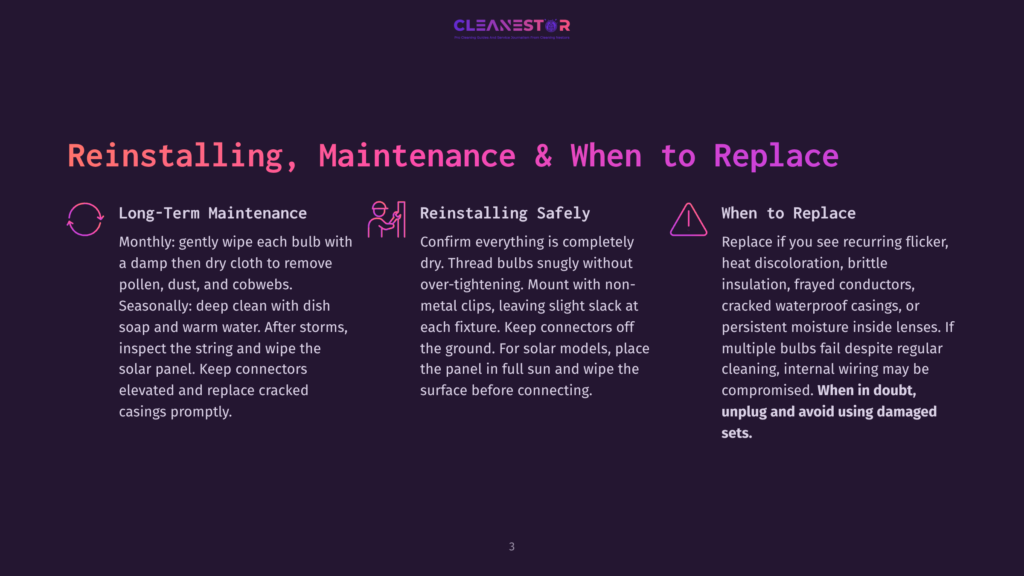
Adopt a regular cleaning schedule to keep your outdoor lights bright and reliable. Every month, gently wipe each bulb and fixture with a damp cloth followed by a dry cloth to remove pollen, dust, cobwebs, and light grime. For seasonal deep clean sessions, fill a bucket with warm water and add drops of mild dish soap to create an effective cleaner; use a sponge, cloth, or soft-bristled brush for tight areas.
Avoid using harsh chemicals or abrasive pads that damage lenses and seals. After storms or pollution events, inspect the string and wipe the solar panel if present. Keep connectors elevated, replace cracked casings promptly, and verify waterproof gaskets remain intact. Unplug before any maintenance, and let everything become completely dry to keep them shining and extend service life.
When to Replace Your String Lights
Replacement is the safest way to clean up chronic issues that maintenance cannot solve. Consider new outdoor string lights if you observe recurring flicker, heat discoloration, brittle insulation, or frayed conductors along the string. Cracked casing around sockets that defeats waterproof protection, corroded contacts that resist a gentle wipe, or persistent moisture inside lenses after harsh weather are red flags.
If multiple bulbs fail frequently despite regular cleaning with dish soap, warm water, and a microfiber cloth, internal wiring may be compromised. Solar panel models should be replaced if the panel output drops sharply despite efforts to wipe the solar surface and remove dirt and grime. When in doubt, unplug and avoid using damaged sets; modern LEDs often improve efficiency, durability, and overall illumination.
Making Elegant Light Posts for Outdoor String Lights and Really Clean Install
As an Amazon Associate, Cleanestor earns from qualifying purchases at no additional cost to you.