
Solar panels need cleaning every 6-12 months. Dust, bird droppings, and pollen can reduce efficiency.
Clean solar panels are crucial for optimal performance. Over time, dirt and grime accumulate, blocking sunlight. This buildup decreases the panels’ ability to generate electricity. Regular cleaning ensures they work at their best. But how often should you clean them?
It depends on your location and weather conditions. For instance, areas with high pollution or frequent dust storms might need more frequent cleaning. On the other hand, regions with regular rainfall can rely on nature to do the job. In this blog, we’ll explore the factors that influence cleaning frequency and provide tips to keep your solar panels efficient and clean.
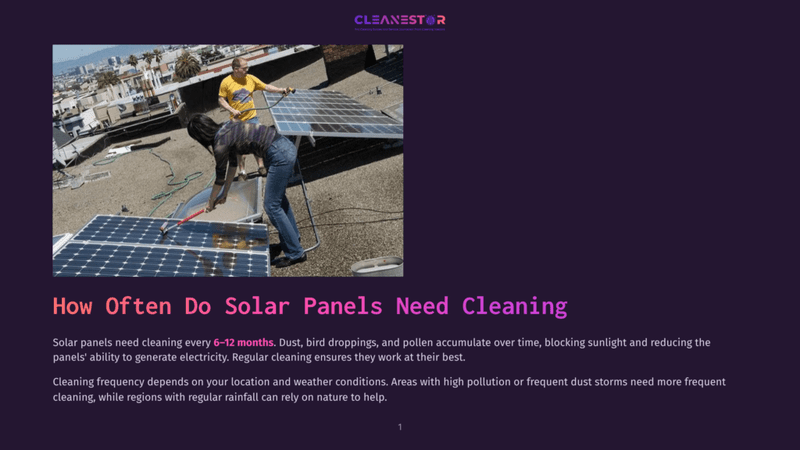

Importance Of Clean Solar Panels
Solar panels are a significant investment for many homeowners. Keeping them clean is essential. Clean solar panels work better and last longer. Dirt, dust, and debris can reduce their efficiency. Let’s explore why clean solar panels are so important.
Efficiency And Performance
Clean solar panels capture more sunlight. More sunlight means more energy. Dirt and grime block sunlight. This reduces the panels’ power output. Regular cleaning ensures maximum energy production. You get the most out of your investment.
Longevity Of Panels
Clean solar panels last longer. Dirt and debris can cause damage over time. This can lead to costly repairs. Regular cleaning prevents build-up. It keeps the panels in good condition. Clean panels are less likely to need repairs. They can serve you well for many years.
Factors Affecting Cleaning Frequency
Solar panels are a great way to harness energy from the sun. But they need to be clean to work well. How often should you clean them? It depends on several factors. Let’s explore some of them.
Location And Climate
Where you live plays a big role. Dust and pollen can settle on panels. In desert areas, dust storms can cover them quickly. In coastal regions, salt can build up. If you live near a busy road, pollution from cars can make your panels dirty.
Climate also matters. In rainy areas, nature helps out. Rain can wash away some of the dirt. But in dry areas, you may need to clean more often. Snow can also affect your panels. If snow sits on them, it blocks the sun. Clearing the snow is important.
Type Of Installation
The way your solar panels are installed affects how often you need to clean them. Roof-mounted panels are less likely to get dirty. Ground-mounted panels are closer to the ground. They can collect more dirt and debris. Panels installed at an angle can stay cleaner longer. The tilt helps rain wash off dirt.
Panels in areas with lots of trees might need more cleaning. Leaves, bird droppings, and tree sap can make them dirty. If you have a solar farm, the need for cleaning increases. Large installations cover more area. They can collect more dirt.
In summary, the location, climate, and type of installation are key factors. They determine how often you need to clean your solar panels. Regular cleaning keeps them efficient and extends their lifespan.
Signs Your Solar Panels Need Cleaning
Regular cleaning of your solar panels ensures maximum efficiency. Dirty panels can reduce energy output. Identifying the signs can help maintain their performance. Below are the key indicators that your solar panels need cleaning.
Visible Dirt And Debris
One clear sign is visible dirt and debris on the surface. Dust, leaves, bird droppings, and pollen can accumulate. These can block sunlight, reducing efficiency. Inspect your panels regularly for any visible buildup. If you see dirt or debris, it’s time for cleaning.
Drop In Energy Output
A sudden drop in energy output is another sign. Monitor your solar panel system’s performance. If there is a noticeable decrease in energy production, dirt might be the cause. Compare current output with previous records. A significant drop indicates the panels need cleaning.
Best Times To Clean Solar Panels
Keeping solar panels clean ensures they work efficiently. The best times to clean solar panels vary. It depends on the season and weather conditions. Cleaning solar panels at the right time helps maintain their performance.
Seasonal Considerations
Seasons affect the cleanliness of solar panels. In spring, pollen and dust can accumulate. Summer brings dry conditions, leading to dust buildup. Fall leaves and debris can cover panels. Winter snow and ice may hinder sunlight. Each season requires a different cleaning approach.
Weather Conditions
Weather plays a crucial role in cleaning solar panels. After rain, dirt and dust can stick to the panels. Cleaning them then can be effective. Avoid cleaning during extreme heat. It can cause water to evaporate quickly, leaving streaks. Cloudy days or early mornings are ideal for cleaning. Windy days can blow dust and dirt onto clean panels. Choose calm days for the best results.
DIY Cleaning Vs. Professional Services
Cleaning solar panels is crucial for maintaining their efficiency. You may wonder if you should clean them yourself or hire professionals. Both options have their own set of advantages and disadvantages. Let’s explore the pros and cons of each.
Pros And Cons Of Diy
DIY cleaning can be a good choice for many reasons. It allows you to take control of the maintenance process and can be cost-effective. Here are the pros and cons:
| Pros | Cons |
|---|---|
|
|
Benefits Of Hiring Professionals
Hiring professionals can be a wise decision for many homeowners. They bring expertise and proper tools to the job. Here are some key benefits:
- Expertise: Professionals have the knowledge to clean without causing damage.
- Efficiency: They work quickly and effectively, saving you time.
- Safety: Professionals are trained to work safely on rooftops.
- Quality: They use specialized equipment for thorough cleaning.
Recommended Cleaning Methods
Cleaning solar panels regularly helps maintain their efficiency. Dust, dirt, bird droppings, and other debris can reduce their effectiveness. Using the right cleaning methods ensures you keep your panels in top condition.
Tools And Equipment
Proper tools and equipment make the cleaning process easier and safer. Here is a list of essential items:
- Soft brush or squeegee: These help remove debris without scratching the panels.
- Garden hose: A hose with a spray nozzle helps rinse off dirt.
- Non-abrasive sponge: Use this to wipe the panels gently.
- Bucket: Fill it with soapy water for cleaning.
- Biodegradable soap: Use a mild soap to avoid damaging the panels.
- Safety gear: Wear gloves and safety goggles for protection.
Step-by-step Guide
Follow this step-by-step guide to clean your solar panels effectively:
- Turn off the system: Safety first. Ensure the system is off before cleaning.
- Check the weather: Clean on a cool, cloudy day to avoid quick drying.
- Rinse the panels: Use a garden hose to remove loose dirt and debris.
- Prepare soapy water: Fill a bucket with water and a small amount of biodegradable soap.
- Scrub gently: Use a non-abrasive sponge or soft brush to clean the panels.
- Rinse again: Rinse off the soapy water with the garden hose.
- Dry the panels: Use a squeegee to remove excess water and prevent streaks.
Following these recommended methods ensures your solar panels stay clean and efficient. Remember to clean them every six months or as needed. Proper maintenance will help your solar panels perform at their best.
Safety Precautions For Cleaning
Cleaning solar panels can improve their efficiency. Yet, it is crucial to follow safety precautions. Neglecting safety can lead to accidents. Below are important safety measures to consider.
Handling Electrical Components
Always turn off the solar panel system before cleaning. This ensures no electric shock risk. Wear rubber gloves for extra safety. Use non-conductive tools to avoid electrical hazards. Check for any exposed wires. If found, contact a professional immediately.
Working At Heights
Cleaning solar panels often involves working at heights. Use a stable ladder with non-slip feet. Have someone hold the ladder if possible. Wear a safety harness if the roof is steep. Avoid cleaning on windy or rainy days. Wet surfaces increase the risk of slipping. Always be cautious and move slowly.
Maintenance Tips For Solar Panels
To keep your solar panels working efficiently, regular maintenance is key. Dirty panels can lose efficiency, lowering your energy savings. Here are some essential tips to ensure your solar panels remain in top condition.
Regular Inspections
Inspect your solar panels at least twice a year. Look for dirt, debris, and any signs of damage. A visual check can help spot issues early. Use a soft brush to remove leaves and dust.
Preventive Measures
Taking preventive steps can prolong the lifespan of your solar panels.
- Trim trees that may cast shadows on your panels.
- Install bird deterrents to avoid nesting.
- Use a hose with a gentle spray to clean the panels.
- Avoid using harsh chemicals or abrasive materials.
Following these tips will help maintain the efficiency of your solar energy system.
Frequently Asked Questions
How Often Should Solar Panels Be Cleaned?
Solar panels should be cleaned at least once or twice a year. Cleaning frequency depends on your location and weather conditions.
What Is The Best Way To Clean Solar Panels?
The best way to clean solar panels is using water and a soft cloth. Avoid harsh chemicals and abrasive materials.
Can Dirty Solar Panels Reduce Efficiency?
Yes, dirty solar panels can reduce efficiency by up to 25%. Regular cleaning ensures maximum energy production.
Do Solar Panels Clean Themselves?
Some solar panels have self-cleaning coatings. However, regular manual cleaning is still recommended for optimal performance.
Conclusion
Keeping solar panels clean ensures maximum efficiency and longevity. Clean them twice a year for optimal performance. Dust, debris, and bird droppings can reduce energy output. Regular maintenance helps avoid costly repairs. Using soft brushes and gentle water works best.
Monitor panels regularly to determine if extra cleaning is needed. In some regions, more frequent cleaning may be necessary. Remember, clean panels produce more energy and save money. By maintaining your solar panels, you protect your investment and the environment.
Start a cleaning routine now for better efficiency and savings.
As an Amazon Associate, Cleanestor earns from qualifying purchases at no additional cost to you.