
Finding the right glass cleaner for tinted windows can be tricky. Not all cleaners are safe for your tint.
Tinted windows add style and privacy to your car or home. They also block harmful UV rays. But, harsh cleaners can damage the tint, causing it to peel or fade. Using the wrong product might lead to costly repairs. So, choosing the correct cleaner is important.
In this blog, we will explore which glass cleaners are safe for tinted windows. We will guide you through the best options, ensuring your tint stays in top condition. Stay tuned to learn more about protecting your investment and keeping your windows spotless.
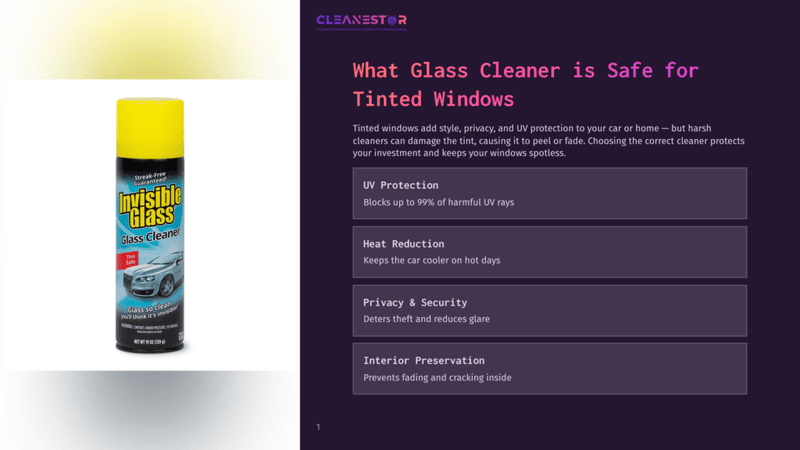

Importance Of Tinted Windows
Tinted windows are more than just a style statement. They provide numerous benefits for both your vehicle and health. By blocking out harmful UV rays, tinted windows protect the interior of your car. This can help in maintaining the car’s value over time.
Additionally, tinted windows offer privacy and security. They make it harder for prying eyes to see inside. This can deter potential theft. They also help in reducing glare from the sun or headlights. This can make driving safer, especially at night.
Benefits Of Tinting
- UV Protection: Blocks up to 99% of harmful UV rays.
- Heat Reduction: Keeps the car cooler during hot days.
- Privacy: Offers a level of privacy to passengers.
- Glare Reduction: Reduces glare from the sun and headlights.
- Interior Preservation: Prevents fading and cracking of the car’s interior.
Common Concerns
People often worry about cleaning tinted windows. Using the wrong cleaner can damage the tint. This is a valid concern. Some cleaners contain harsh chemicals that can cause the tint to peel or bubble.
Here is a table to help you understand what to avoid:
| Ingredient | Effect on Tinted Windows |
|---|---|
| Ammonia | Can cause tint to peel and bubble |
| Vinegar | May weaken the adhesive |
| Alcohol | Can fade the tint |
Using a cleaner with these ingredients can damage your tinted windows. Always check the label. Ensure the cleaner is safe for tinted windows.
Types Of Glass Cleaners
Choosing the right glass cleaner for tinted windows is crucial. The wrong cleaner can damage the tint, causing it to fade or peel. Understanding the different types of glass cleaners can help you make an informed choice.
Ammonia-based Cleaners
Ammonia-based cleaners are common and effective for general glass cleaning. They cut through grease and grime with ease. However, they are not suitable for tinted windows. Ammonia can weaken the adhesive on window tint, leading to bubbles and peeling. Always check the label of any glass cleaner to ensure it is ammonia-free before using it on tinted windows.
Ammonia-free Cleaners
Ammonia-free cleaners are the best choice for tinted windows. These cleaners are formulated to be gentle on tint film. They clean without damaging the adhesive or causing discoloration. Many ammonia-free cleaners are available in the market. Look for those specifically labeled safe for tinted windows.
Using an ammonia-free cleaner helps maintain the appearance and longevity of your window tint. It ensures your windows remain clear and streak-free. Always use a soft cloth or microfiber towel to apply the cleaner. This prevents scratches and keeps your tint in top condition.
Why Ammonia Is Harmful
Using the wrong glass cleaner can damage your tinted windows. One common ingredient to avoid is ammonia. It seems harmless, but it can cause serious issues. This section will explain why ammonia is harmful.
Effects On Tint
Ammonia can damage the tint of your windows. It breaks down the adhesive that keeps the tint in place. Over time, the tint starts to peel or bubble. The color may also fade, ruining the look of your windows. This damage is often irreversible.
Health Hazards
Ammonia is not just bad for your windows. It is also harmful to your health. Inhalation can cause respiratory issues. It may irritate your eyes and skin. Long-term exposure can lead to more severe health problems. Always choose a cleaner without ammonia.
Safe Ingredients For Tinted Windows
Finding the right glass cleaner for tinted windows is crucial. Regular cleaners can damage the tint film. This can lead to costly replacements. To protect your windows, choose products with safe ingredients.
Natural Cleaners
Natural cleaners are often the best choice. They contain no harsh chemicals. Here are some safe ingredients:
- White vinegar: Mix with water for a simple solution. It’s effective and safe.
- Baking soda: Use it to scrub away stubborn spots. It’s gentle on tint film.
- Castile soap: Dilute with water for a mild cleaner. It’s ideal for regular use.
Commercial Options
Some commercial cleaners are also safe for tinted windows. Look for these ingredients:
| Ingredient | Benefits |
|---|---|
| Ammonia-free formulas | Won’t damage the tint film |
| Isopropyl alcohol | Cleans effectively without harming the tint |
| Distilled water | Leaves no residue or streaks |
Always check the label. Ensure the product is safe for tinted windows. Avoid cleaners with ammonia. They can cause the tint to peel or discolor.
DIY Glass Cleaner Recipes
DIY glass cleaner recipes offer a safe and effective way to clean tinted windows. Using household ingredients, you can create solutions that won’t damage the tint. These recipes are easy to make and use, ensuring your windows stay spotless without any risks.
Simple Vinegar Solution
A simple vinegar solution is great for cleaning tinted windows. Mix one part white vinegar with one part water. Pour the mixture into a spray bottle for easy application. Spray the solution on the window and wipe with a soft cloth. The vinegar helps remove dirt and grime without harming the tint.
Baking Soda Mix
Baking soda is another excellent ingredient for a DIY glass cleaner. Combine two tablespoons of baking soda with a cup of water. Stir until the baking soda dissolves. Pour the mix into a spray bottle. Spray the solution on the window and wipe with a soft cloth. This mix effectively cleans without damaging your window tint.
Steps To Clean Tinted Windows
Cleaning tinted windows requires special care. Using the wrong glass cleaner can damage the tint. Follow these steps to ensure your windows stay in great condition. This guide will help you clean your tinted windows safely and effectively.
Preparation
Start by gathering your supplies. You need a microfiber cloth, a spray bottle with water, and a mild soap. Avoid cleaners with ammonia. Ammonia can damage the tint. Ensure your car is parked in a shaded area. Direct sunlight can cause streaks. Roll down the windows slightly. This ensures you clean the edges too.
Cleaning Process
First, spray the soapy water onto the cloth. Do not spray directly onto the window. This prevents the liquid from seeping into the edges. Gently wipe the window in a vertical motion. This helps avoid streaks. Use a dry microfiber cloth to remove any remaining water. Repeat the process for all windows.
Pay extra attention to the edges. Dirt often accumulates there. Make sure to clean both the inside and outside. This ensures a clear view. Regular cleaning helps maintain the tint. It keeps your windows looking new.
Mistakes To Avoid
Cleaning tinted windows can be tricky. Many make mistakes that damage the tint. Here are common errors to avoid when cleaning tinted windows.
Using Harsh Chemicals
Some cleaners contain ammonia. Ammonia can damage the tint. It can cause the film to peel or bubble. Always check the label. Ensure the cleaner is ammonia-free. Mild soap and water work well. They clean without harming the tint.
Scrubbing Too Hard
Scrubbing too hard can scratch the tint. Scratches weaken the film. Use a soft cloth or sponge. Gently wipe the window. Avoid using abrasive pads. They can cause damage. Be gentle to keep your tint looking new.
Choosing The Right Cleaning Tools
Choosing the right cleaning tools for tinted windows is crucial. Using the wrong tools can damage your tint. The right tools ensure your windows stay clear and your tint remains intact. Let’s explore the best options.
Microfiber Cloths
Microfiber cloths are the top choice for cleaning tinted windows. They are soft and gentle. They do not scratch the surface. Microfiber traps dirt and dust. This prevents streaks and leaves windows spotless. Always use a clean cloth. Dirty cloths can cause scratches.
Soft Sponges
Soft sponges are another safe tool for tinted windows. They are gentle and effective. Ensure the sponge is clean. Any grit can scratch the tint. Dampen the sponge slightly. Avoid soaking it. Excess water can seep under the tint. Squeeze out the sponge well before use.
Frequently Asked Questions
What Type Of Glass Cleaner Is Safe For Tinted Windows?
Use ammonia-free glass cleaners for tinted windows. Ammonia can damage the tint film. Choose cleaners specifically labeled safe for tinted windows.
Can I Use Vinegar To Clean Tinted Windows?
Yes, vinegar is safe for tinted windows. Mix it with water for a gentle, effective cleaner. Avoid using it in high concentrations.
How Often Should I Clean Tinted Windows?
Clean tinted windows every two weeks. Regular cleaning prevents dirt buildup and keeps the tint looking fresh. Use a soft cloth.
Are Commercial Glass Cleaners Safe For Tinted Windows?
Not all commercial glass cleaners are safe. Ensure they are ammonia-free and labeled safe for tinted windows. Read the product label carefully.
Conclusion
Choosing the right glass cleaner protects your tinted windows. Avoid ammonia-based cleaners. They can damage the tint. Instead, opt for tint-safe products. These cleaners maintain your window’s shine and clarity. Clean your windows regularly for best results. Always follow the instructions on the product label.
This ensures you get the best performance. With proper care, your tinted windows will look great and last longer. Keep your ride looking sharp.
As an Amazon Associate, Cleanestor earns from qualifying purchases at no additional cost to you.