
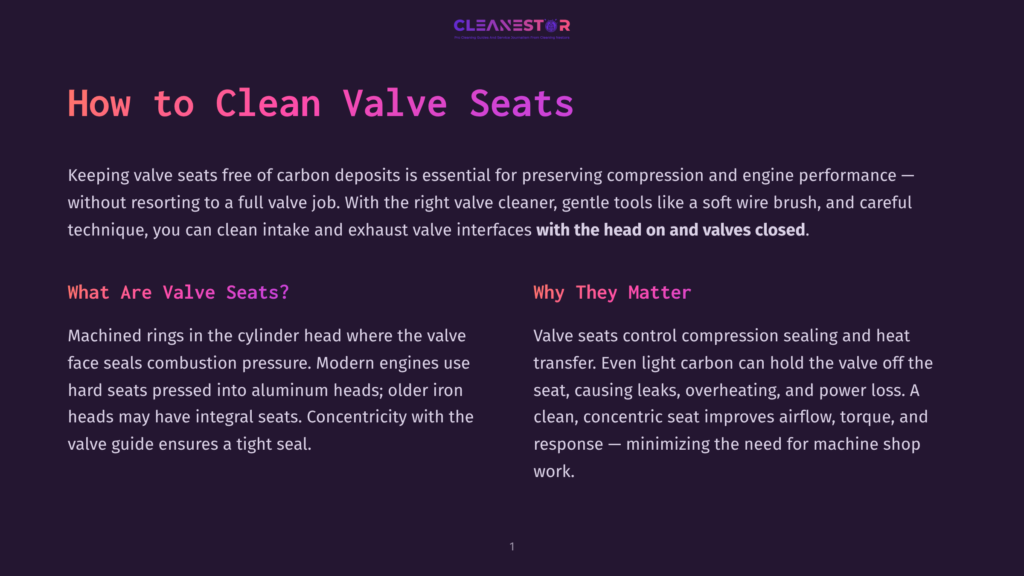
Keeping the valve seat area free of carbon deposits is essential for preserving compression and engine performance without resorting to a full valve job. This guide explains how to clean the intake and exhaust valve interfaces with the head on, and valves closed.
By focusing on the intake and exhaust ports, the area of the valve face, and the transition to the valve seat, you can reduce carbon buildup that leads to a leak between valves and seats.
With the right valve cleaner, lapping compound alternatives, and gentle tools like a wire brush, you can improve combustion quality and restore performance without removing the valves.
Understanding Valve Seats
Valve seats form the sealing ring in the cylinder head where the intake valve and exhaust valve meet the head to contain combustion pressure. On engines with hard seats or stainless steel valves, the seat must precisely match the valve face to transfer heat from the valve head into the cylinder head and maintain airtight compression.
Because the valves to the seats must align perfectly, even slight carbon build on the port side or the area of the valve can disrupt sealing. The seat’s geometry, the valve guide alignment, and the condition of the valve stem and springs all work together to ensure consistent seating when the valves are closed.
Understanding this interface helps you clean effectively without harming the seat.
What Are Valve Seats?
A valve seat is the machined ring in the cylinder head that provides a durable surface for the valve face to seal combustion pressure in the cylinder. Located at the transition between the port and the combustion chamber, the intake and exhaust seats endure repeated impact and high heat as the valve head closes.
Modern engines often use hard seats pressed into aluminum heads, while older iron heads may have integral seats. Whether running stainless valves or standard materials, the seat’s finish and concentricity with the valve guide ensure a tight seal.
Proper contact between the valves and seats enables stable compression and efficient airflow through the manifold, supporting clean combustion and reliable engine performance.
The Importance of Valve Seats in Engine Performance
Valve seats directly affect performance by controlling compression sealing and heat transfer. When the valve face mates cleanly with the seat, combustion stays contained, optimizing power and fuel efficiency. Even light carbon build can hold the valve head off the seat, causing a leak that reduces compression and overheats the valve.
Precise seating also sheds heat through the head, protecting valves at high temperatures. A clean, concentric seat improves airflow at low lift, enhancing torque and response. Maintaining seats minimizes the need for a machine shop valve job, installing a new valve seat, or using a valve grinder and machine, keeping the engine smooth and consistent.
Common Issues with Valve Seats
Common problems include carbon buildup on the intake and exhaust seat edges, pitting on the valve face, and erosion on hard seats from hot exhaust flow.
Carbon can wedge between valves and seats, causing leaks, misfires, and poor sealing. Worn valve guides let the valve stem wobble, misaligning the valve to the seats and accelerating wear. A damaged gasket at the cylinder head or a warped head can compound sealing issues.
If light cleaning with a valve cleaner and a soft wire brush cannot clean up the valves, you may need to lap the valves with lapping compound or use a valve grinder; severely worn parts may require new valves or installing a new valve seat at a machine shop.
Recognizing Carbon Buildup on Valves
Recognizing carbon buildup on the intake and exhaust valve areas begins with understanding how combustion byproducts migrate through the port and settle on the valve face and valve seat. Sooty carbon deposits typically appear as matte black layers on the intake valve, while the exhaust valve often shows flaky, chalky carbon from hotter exhaust flow.
When valves are closed, these layers can keep the valve head off the seat, creating a leak that reduces compression and engine performance. Use a bright light through the manifold or port to inspect the area of the valve, the transition to the seat, and the margin around the valve stem. If you see heavy deposits at the seat interface, plan a gentle cleaning with valve cleaner and a soft brush.
Identifying Carbon Buildup on Intake and Exhaust Valves
To identify carbon buildup, remove the manifold or access the port and visually assess the intake and exhaust surfaces with the valves closed. On the intake valve, sticky carbon deposits form from oil mist past the valve guide and reversion; they often ring the valve face and collect where the port meets the seat.
On the exhaust valve, high heat bakes deposits into hard scales that can chip and embed between valves and seats. Look for uneven dark bands on the valve seat a little inside the cylinder, and inspect around the valve stem for gummy residue. Irregular marks or a shiny gap on the valve face indicate a leak path.
If light wiping fails, use a non-abrasive cleaner first and reserve lapping as a last resort.
Effects of Carbon Buildup on Engine Efficiency
Even a thin carbon layer can prevent full sealing, lowering compression and power.
On the exhaust side, deposits insulate the valve, slowing heat transfer and risking valve overheating. On the intake side, carbon roughens the port and valve face, reducing flow and mixture quality. Excess deposits can also encourage pre-ignition.
Careful chemical cleaning restores sealing and performance without immediate machine work.
Signs That Your Valves Need Cleaning
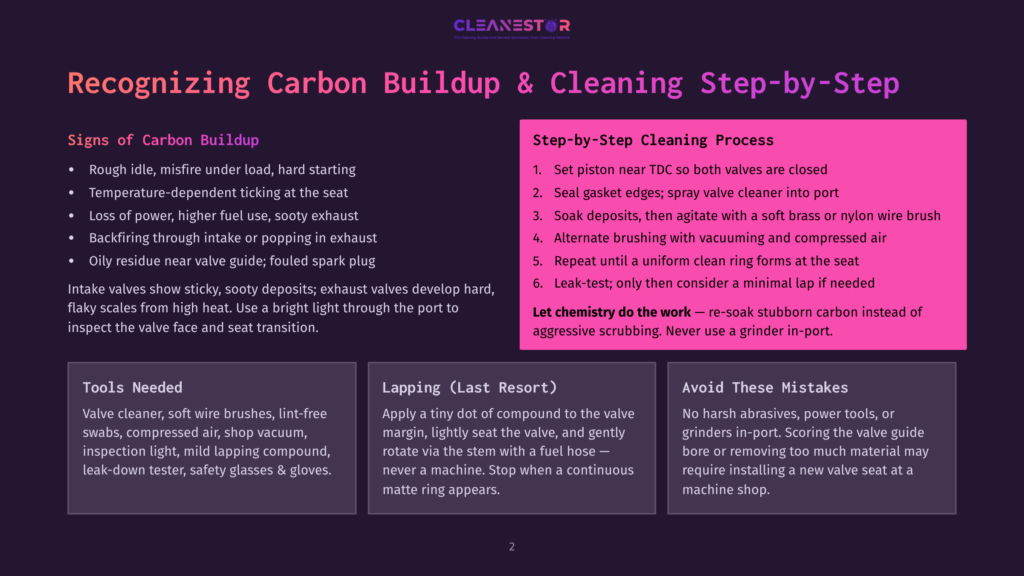
Common signs include rough idle, misfire under load, and hard starting from poor compression when the valves are closed.
A ticking note that changes with temperature can indicate a small leak at the seat. Loss of power, higher fuel use, and sooty exhaust suggest incomplete combustion. Backfiring through the intake points to intake valve sealing issues; popping in the exhaust hints at an exhaust leak past the seat.
Inspect for oily residue around the valve guide and a fouled plug from the affected cylinder. If a wet leak-down or compression test improves with oil, but sealing remains erratic, clean the valves in-port with valve cleaner and a soft brush before considering lapping or machine work.
Step-by-Step Process for Cleaning Valve Seats
A careful, repeatable process is the best way to clean the valve seat area and restore engine performance without a full valve job.
Confirm the cylinder’s valves are closed before cleaning to protect the chamber. Work through intake and exhaust ports one at a time, using a valve cleaner suited to carbon deposits. Gently agitate the area of the valve and the seat transition with a soft wire brush, then flush the port to remove loosened carbon buildup.
If a light leak persists, you may lap the valves very lightly with a mild lapping compound applied sparingly to the valve head margin. Recheck compression and repeat only as needed to avoid harming hard seats or stainless valves.
Preparation: Tools and Materials Needed
Before you begin, gather the right tools and protections to clean valves safely and effectively:
- Quality valve cleaner
- Soft brass or nylon wire brushes sized for the port
- Lint-free swabs
- Compressed air
- Shop vacuum with a small nozzle for the manifold and port
- Painter’s tape and rags to shield the cylinder head and gasket surfaces
- Bright inspection light for the intake and exhaust ports
- Mild lapping compound for stubborn carbon
- Cotton applicators
- Short length of fuel hose to gently spin the valve stem by hand if lapping the valves
- Leak-down tester to confirm sealing when the valves are closed
- Safety glasses and gloves
Avoid harsh abrasives, power tools, or a valve grinder in-port; valves may be damaged, and installing a new valve seat could be required if too much material is removed.
Cleaning Valves Without Removing Them
Set the piston near TDC compression so both valves are closed, reducing the chance of debris entering the chamber. Seal surrounding gasket edges, then spray valve cleaner into the port and allow it to soak deposits on the valve face and seat. Work the area with a soft wire brush, staying off the valve guide bore to avoid scoring.
Alternate brushing with vacuuming and compressed air to extract loosened carbon. Rotate the engine to ensure fresh seating, then reapply cleaner and repeat until a uniform, clean ring forms at the valve seats a little inside the port. Leak-test after cleaning and only then consider a minimal lap if needed.
Techniques for Effective Valve Cleaning
Use short, controlled strokes from port to seat to keep abrasives away from the cylinder. Let chemistry do the work—re-soak stubborn carbon instead of aggressive scrubbing.
If you must lap, apply a tiny dot of lapping compound to the valve head margin, lightly seat the valve, and gently rotate via the valve stem with the hose between fingers—never with a machine. Clean thoroughly, inspect the contact band, and stop as soon as a continuous matte ring appears.
Protect valve springs and the valve guide from debris, and never use a grinder in the port. Finish with a leak-down or compression check to verify sealing.
Preventing Future Carbon Buildup on Valves
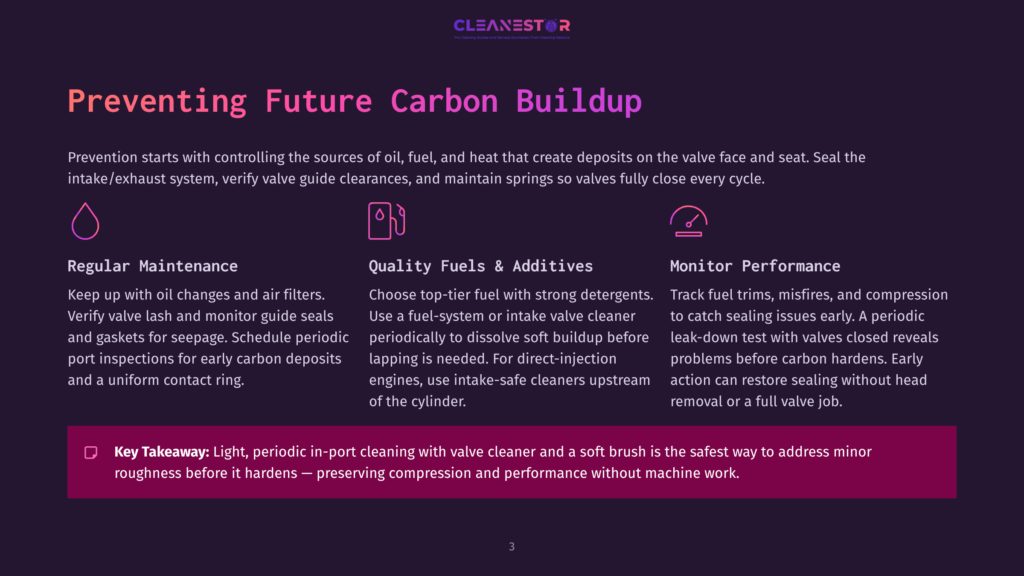
Preventing carbon buildup begins with controlling the sources of oil, fuel, and heat that create deposits on the valve face, valve seat, and the area of the valve near the port. Seal the intake/exhaust system and verify valve guide clearances and spring force to ensure consistent seating.
Maintain the manifold, gaskets, and PCV system to minimize oil mist. Use a proven valve cleaner periodically through the intake to remove light deposits before they harden, extending the interval before any lapping or a valve job might be needed.
Regular Maintenance Tips for Valves
Schedule regular inspections through the port to check for early carbon deposits and a uniform contact ring at the valve seats, a little inside the cylinder head. Keep up with oil changes and air filters to limit deposit formation.
Verify/adjust valve lash and ensure springs are healthy so the valve fully closes. Monitor valve guide seals and gaskets for seepage that can foul the intake valve.
Light, periodic in-port cleaning is a safe way to address minor roughness before it hardens.
Using Quality Fuels and Additives
Choose top-tier fuel with strong detergents to limit valve deposits.
Periodic use of a fuel-system or intake valve cleaner can dissolve soft buildup before lapping is needed. For direct-injection engines, consider intake-safe cleaners upstream of the cylinder. Avoid harsh solvents that could attack gaskets or the valve stem seal.
Consistency matters more than strength—use products as directed to preserve compression and performance without machine work.
Monitoring Engine Performance
Track trims, misfires, and compression to catch sealing issues early. Listen for temperature-dependent ticking and inspect plugs for soot. A periodic leak-down test with valves closed reveals issues before carbon hardens.
If airflow data shows an imbalance, inspect ports/manifolds and address with a valve cleaner and careful brushing. Early action can restore sealing without head removal or a full valve job.
Tech Tip: Polishing Valve Seats – Roadkill Extra
As an Amazon Associate, Cleanestor earns from qualifying purchases at no additional cost to you.