
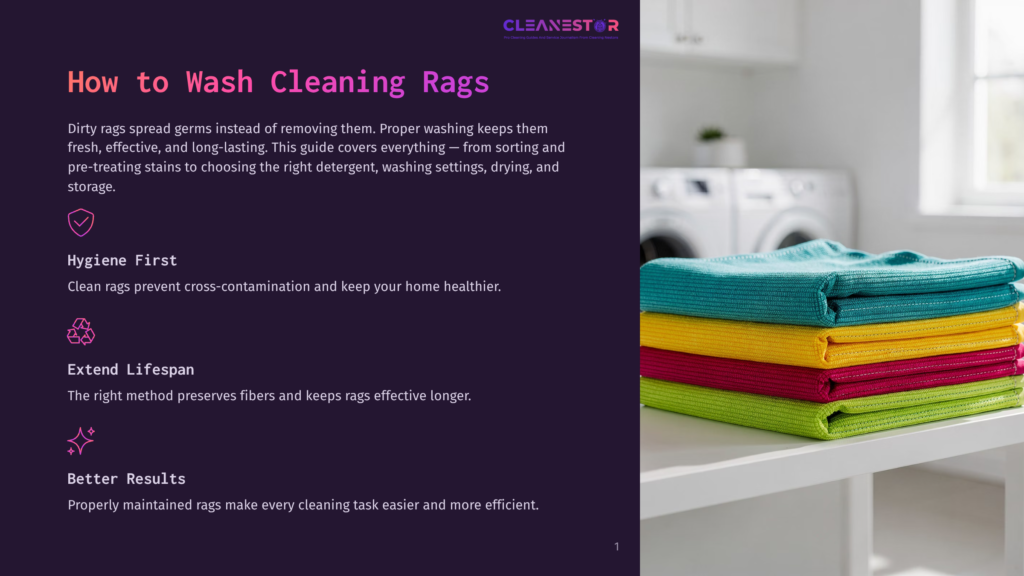
Washing cleaning rags might seem simple, but it requires proper care. Clean rags are essential for effective cleaning.
Dirty rags can spread germs instead of removing them. Regular washing keeps them fresh and effective. But how should you wash them? Using the right method extends the life of your rags and ensures they stay clean. In this post, you’ll learn the best techniques to wash your cleaning rags.
We will cover tips on sorting, pre-treating stains, and choosing the right detergents. Your rags will be cleaner and more efficient, making your cleaning tasks easier. Keep reading to discover how to maintain your cleaning rags properly.
Introduction To Cleaning Rags
Cleaning rags are essential tools in every household and workplace. They help keep surfaces clean and free from dust and grime. Properly maintaining these rags ensures their effectiveness and longevity. Learning how to wash cleaning rags correctly is crucial for hygiene and performance.
Importance Of Clean Rags
Clean rags are vital for efficient cleaning. Dirty rags can spread germs and dirt, making surfaces dirtier. Ensuring rags are clean prevents cross-contamination. This keeps your home or workplace healthier. Regular washing also extends the life of your rags.
Types Of Cleaning Rags
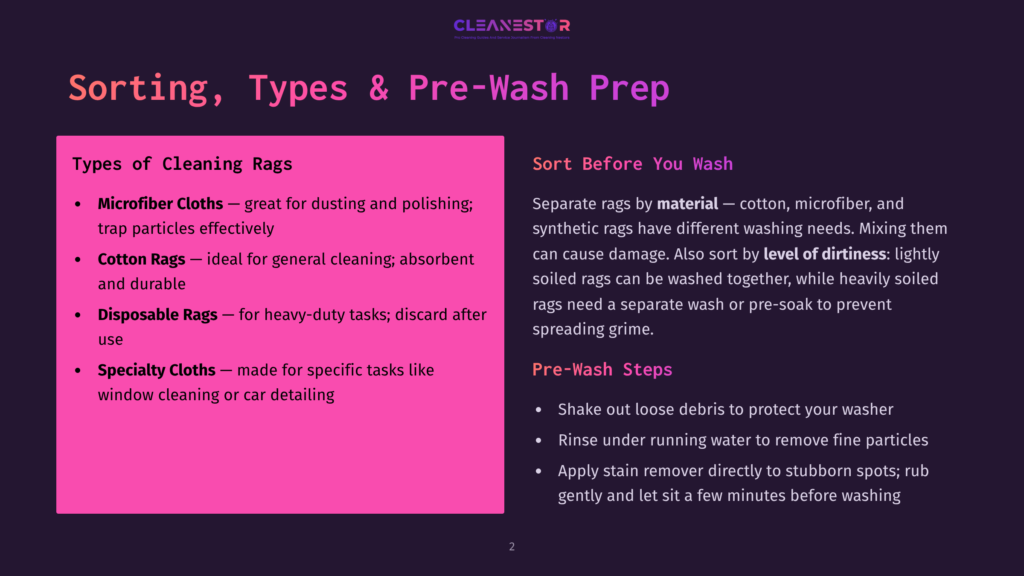
There are various types of cleaning rags. Each has a specific use and requires different care methods. Below are the common types:
- Microfiber Cloths: Great for dusting and polishing. They trap dust and particles effectively.
- Cotton Rags: Ideal for general cleaning. Absorbent and durable.
- Disposable Rags: Used for heavy-duty cleaning. Can be thrown away after use.
- Specialty Cloths: Made for specific tasks, like window cleaning or car detailing.
Understanding the type of rag you are using helps in choosing the right washing method.
Sorting Cleaning Rags
Sorting cleaning rags is an essential step before washing. Proper sorting helps maintain the quality of the rags. It also ensures they are cleaned effectively. Sorting rags correctly can prolong their lifespan.
By Material
First, separate rags by their material. Cotton, microfiber, and synthetic rags should be washed separately. Cotton rags are durable but can shrink. Microfiber rags attract dust and dirt easily. Synthetic rags might need gentle washing.
Each material has different washing needs. Mixing materials can ruin some rags. Separate them to maintain their quality and effectiveness.
By Level Of Dirtiness
Next, sort rags by their level of dirtiness. Lightly soiled rags can be washed together. Heavily soiled rags need a separate wash. This prevents spreading dirt and grime. Heavily soiled rags might need a pre-soak.
Sorting by dirtiness ensures a thorough clean. Clean rags stay clean, and dirty rags get a proper wash. This helps in maintaining hygiene standards.
Pre-washing Preparation
Properly washing your cleaning rags is crucial to maintain their effectiveness. Before diving into the actual washing process, it’s essential to prepare your rags. This preparation ensures that your rags come out clean and free from stubborn stains. Let’s break down the pre-washing steps into two main tasks: removing debris and pre-treating stains.
Removing Debris
First, shake out the cleaning rags to remove loose debris. This step prevents dirt from spreading in your washer. Inspect the rags carefully. Pick out any small items, like bits of paper or hair. A quick rinse under running water can help remove fine particles. Be thorough to avoid clogging your machine.
Pre-treating Stains
Next, identify any stains on the rags. Use a good stain remover for stubborn spots. Apply it directly to the stained areas. Gently rub the fabric together to work in the solution. Let it sit for a few minutes. This helps break down the stain before washing. For tougher stains, you might need to repeat this step.
Choosing The Right Detergent
Choosing the right detergent for washing cleaning rags is crucial. It impacts the cleanliness and longevity of your rags. There are various types of detergents available. Each has its own benefits. Let’s look at some options.
Eco-friendly Options
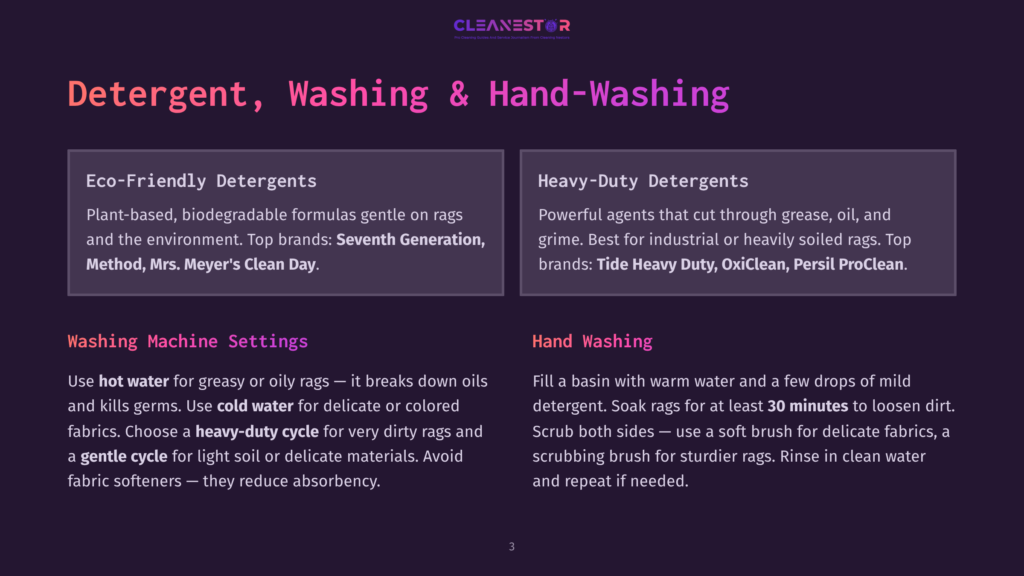
Eco-friendly detergents are great for the environment. They contain natural ingredients. These detergents are free from harsh chemicals. This means they are gentle on your cleaning rags. Here are some popular eco-friendly brands:
- Seventh Generation
- Method
- Mrs. Meyer’s Clean Day
These brands use plant-based ingredients. They also offer biodegradable formulas. This reduces water pollution. Using eco-friendly detergents protects your rags and the planet.
Heavy-duty Detergents
Heavy-duty detergents are perfect for tough stains. They contain powerful cleaning agents. These detergents remove grease, oil, and grime. Ideal for industrial or heavily soiled rags. Popular heavy-duty brands include:
- Tide Heavy Duty
- OxiClean
- Persil ProClean
These detergents offer strong stain-fighting power. They work well with hot water. Your rags will come out clean and fresh. Heavy-duty detergents are effective but can be harsh. Use them wisely to avoid damaging your rags.
Washing Machine Settings
Proper washing machine settings can make a big difference in cleaning rags. Using the right settings ensures your rags come out clean and last longer.
Water Temperature
Choosing the correct water temperature is crucial. Hot water is best for greasy or oily rags. It helps break down the oils and ensures a thorough clean. Cold water is ideal for delicate fabrics or if you are worried about colors bleeding.
| Type of Rag | Water Temperature |
|---|---|
| Greasy/Oily | Hot |
| Delicate/Colored | Cold |
Cycle Selection
The cycle selection is just as important as water temperature. For heavily soiled rags, use a heavy-duty cycle. This cycle uses more water and energy but ensures a deep clean. For lightly soiled or delicate rags, a gentle cycle works best. It prevents wear and tear on the fabric.
- Heavy-duty cycle: Best for very dirty rags.
- Gentle cycle: Ideal for light dirt and delicate fabrics.
Use these settings to keep your cleaning rags in top condition. Proper care will extend their life and keep them effective.
Hand Washing Techniques
Cleaning rags can harbor dirt, grime, and bacteria. Hand washing them ensures they are thoroughly cleaned. This method is also gentle on the fabric, extending the life of your cleaning rags. Follow these easy steps to wash your rags by hand.
Soaking Rags
Start by soaking your cleaning rags. Fill a basin with warm water. Add a few drops of mild detergent. Place the rags in the basin. Let them soak for at least 30 minutes. This step loosens dirt and grime, making them easier to clean.
Scrubbing Methods
Next, scrub the rags to remove embedded dirt. Use a soft brush for delicate fabrics. For sturdier rags, a scrubbing brush works well. Scrub both sides of the rag. Pay attention to stained areas. Rinse the rags in clean water. Repeat scrubbing if necessary.
Drying Cleaning Rags
Drying cleaning rags properly ensures they last longer and remain effective. Whether you use a dryer or prefer air-drying, each method has its benefits. Let’s explore the best ways to dry your cleaning rags.
Using A Dryer
A dryer offers a quick and efficient way to dry cleaning rags. First, ensure your rags are free from heavy soil or grease. Set your dryer to a medium heat setting. High heat can damage the fibers. Toss the rags into the dryer and allow them to tumble until completely dry. Avoid using dryer sheets. They can leave residue on the rags, reducing their cleaning effectiveness.
Air-drying
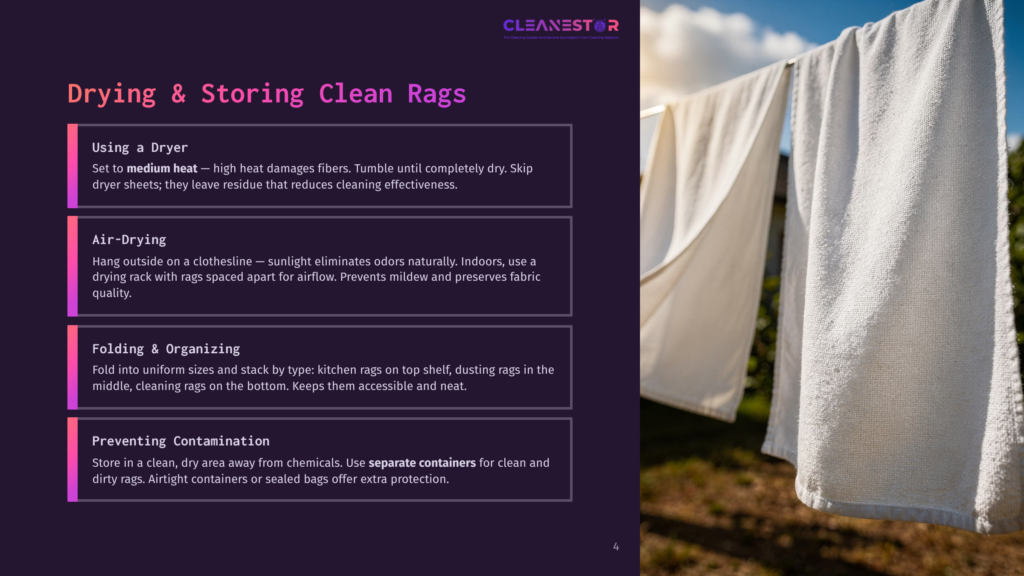
Air-drying is a gentle method to dry cleaning rags. Hang the rags outside on a clothesline. Fresh air and sunlight help eliminate odors. If you prefer drying indoors, use a drying rack. Space the rags out to allow proper air circulation. This prevents mildew and ensures they dry evenly. Air-drying may take longer, but it helps preserve the fabric’s quality.
Storing Clean Rags
Properly storing clean rags is crucial for maintaining their effectiveness and hygiene. By following a few simple steps, you can ensure your rags remain clean, organized, and ready for use when needed.
Folding And Organizing
Folding and organizing clean rags helps keep them neat and accessible. Follow these steps to ensure your rags are properly stored:
- Fold each rag into a compact, uniform size.
- Stack them in a designated storage area, such as a shelf or drawer.
- Sort rags by type or use, such as kitchen rags, dusting rags, and cleaning rags.
Using a table can further help in organizing your rags:
| Type of Rag | Storage Location |
|---|---|
| Kitchen Rags | Top Shelf |
| Dusting Rags | Middle Shelf |
| Cleaning Rags | Bottom Shelf |
Preventing Contamination
Preventing contamination is vital for ensuring your clean rags stay sanitary. Follow these tips to minimize the risk of contamination:
- Store clean rags in a clean, dry area away from dirt and moisture.
- Use separate storage containers for clean and dirty rags.
- Avoid storing clean rags near chemicals or other contaminants.
Using airtight containers or sealed bags can offer additional protection:
Store clean rags in sealed bags or airtight containers to prevent contamination.
By implementing these practices, you can keep your cleaning rags in top condition. This ensures they are always ready for use when you need them.
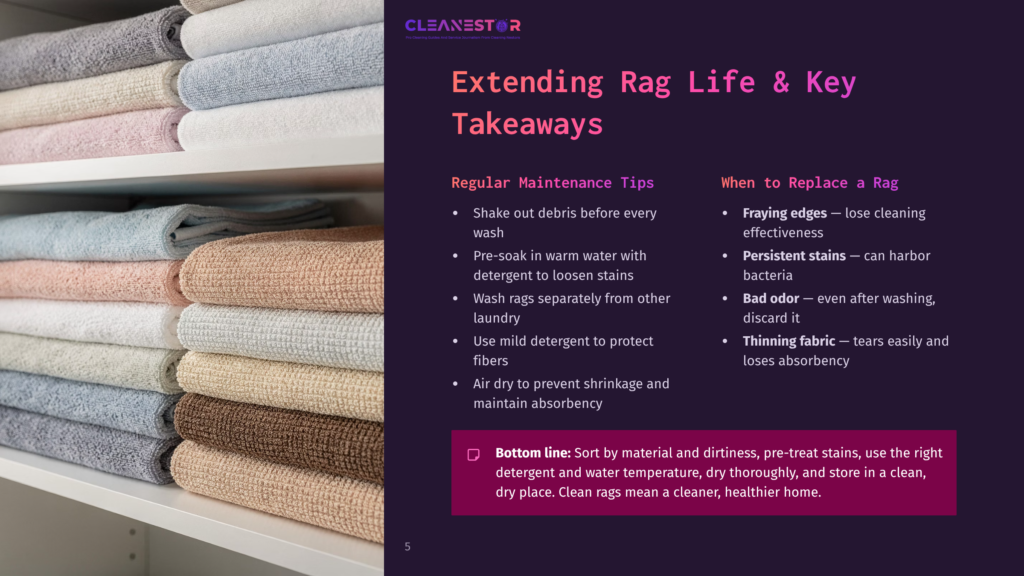
Extending The Life Of Rags
Cleaning rags are essential tools in maintaining a clean space. They tackle dirt and grime with ease. To get the most out of your rags, it is important to take good care of them. Proper maintenance can extend their lifespan, saving you money and ensuring they remain effective.
Regular Maintenance
Regular maintenance keeps your cleaning rags in top shape. Follow these simple steps:
- Shake out debris: Shake out any loose dirt before washing.
- Pre-soak: Soak rags in warm water with detergent to loosen stains.
- Wash separately: Wash rags separately from other laundry to avoid cross-contamination.
- Use mild detergent: Use a mild detergent to avoid damaging the fibers.
- Air dry: Air dry rags to prevent shrinkage and maintain absorbency.
When To Replace
Even with the best care, rags will eventually wear out. Replace them when:
- Fraying edges: Rags with frayed edges lose their cleaning effectiveness.
- Persistent stains: Stubborn stains can harbor bacteria.
- Bad odor: Rags that smell even after washing should be discarded.
- Thinning fabric: Thin rags can tear easily and become less absorbent.
By following these tips, you can extend the life of your cleaning rags and ensure they remain effective for longer.
Frequently Asked Questions
How Often Should I Wash Cleaning Rags?
Cleaning rags should be washed after each use. This prevents the spread of dirt and germs. Regular washing keeps them effective.
What Detergent Should I Use For Cleaning Rags?
Use a heavy-duty detergent for cleaning rags. It effectively removes dirt, grease, and stains. Avoid fabric softeners.
Can I Wash Cleaning Rags With Other Laundry?
It’s best to wash cleaning rags separately. This prevents cross-contamination. Rags can transfer dirt and germs to other laundry.
Should I Use Hot Water To Wash Cleaning Rags?
Yes, use hot water to wash cleaning rags. Hot water kills germs and bacteria. It also helps remove stubborn stains.
Conclusion
Washing cleaning rags properly is easy with the right steps. Start by sorting your rags by color and use. Always shake off excess dirt before washing. Use hot water and a strong detergent. Avoid fabric softeners to maintain absorbency. Dry them thoroughly to prevent mildew.
Clean rags ensure a healthier home and longer-lasting cleaning tools. Follow these tips and keep your cleaning routine efficient. Clean rags, clean home. It’s that simple.
As an Amazon Associate, Cleanestor earns from qualifying purchases at no additional cost to you.