
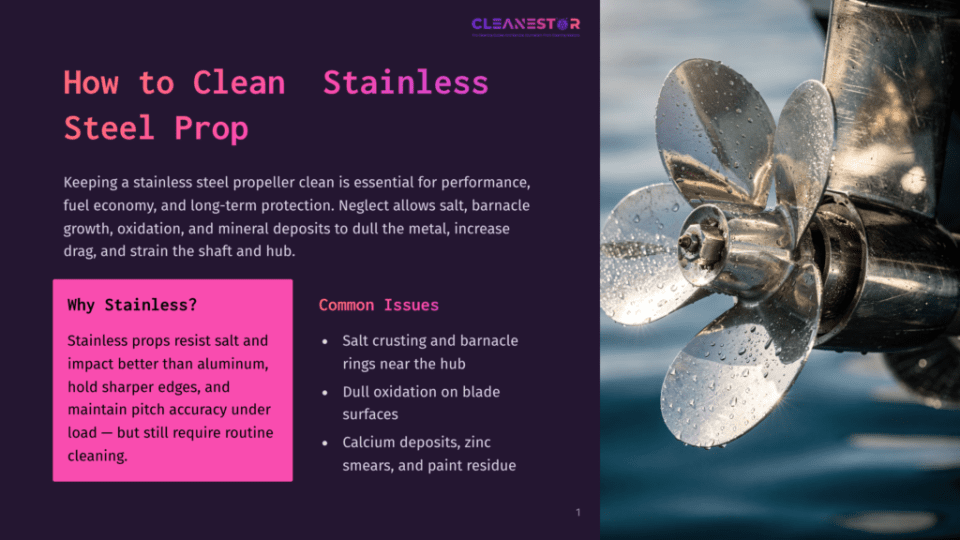
Keeping a stainless steel prop clean is essential for performance, fuel economy, and long-term protection of your boat. When a propeller is neglected, salt, barnacle growth, oxidation, and mineral deposit buildup can dull the metal, increase drag, and strain the shaft and hub.
This guide explains the best way to clean stainless steel propellers using a mild-to-aggressive sequence, when to apply polish or wax, and how to work safely. Whether your boat comes from salt water or fresh water, you will learn how to remove stains and paint, restore shine like new, and effectively prevent future fouling on the blade surfaces and around the hub.

Understanding Stainless Steel Props
Stainless steel props combine strength, corrosion resistance, and precise blade geometry, making them popular for marine performance.
Compared to aluminum, a stainless steel propeller resists salt and impact better, holds sharper edges, and maintains pitch accuracy under load. However, stainless props still accumulate salt, growth, and oxidation that require routine cleaning procedures.
Identify the type of fouling first to choose the right cleaner and brush. A mild wash with fresh water and a sponge may suffice after each run, but periodic deep cleaning of stainless props with vinegar or specialized marine cleaners, followed by polish and wax, keeps the surface smooth to reduce drag and protect the hub and shaft.
Types of Stainless Steel Propellers
Stainless steel propellers vary by blade count, rake, and cup, each influencing how the boat accelerates, lifts the hull, and holds grip in turns. Three-blade designs often deliver top speed and efficiency, while four-blade options can improve hole shot and handling when the hull is heavily loaded. Some props feature venting and specific hub systems that fine-tune slip and spool-up.
Finishes range from mirror-polished to brushed metal, affecting how easily you can clean and polish. Heavier-duty stainless may resist abrasive contact better during a scrub, yet still benefits from a protective coat. Match cleaner aggressiveness to your prop’s finish and geometry to restore shine and reduce future deposit buildup.
Benefits of Using Stainless Props
Key benefits: durability, corrosion resistance, and consistent performance under load.
With rigid stainless steel blades, the prop resists flex, preserving pitch and cup, which helps fuel efficiency and throttle response. Cleaning stainless steel becomes easier when the surface is polished and sealed; a smooth coat sheds salt and growth, requiring only a rinse and wipe after use.
Stainless steel propellers also better tolerate occasional debris impact, reducing the chance of severe deformation. Regular wash, gentle scrub, and periodic polish/wax maintain like-new performance. Applying protective products such as a marine wax or specialized coatings can effectively deter deposit and barnacle adhesion.
Common Issues with Stainless Steel Props
Even stainless steel is not immune to marine fouling and chemical attack. Common issues include salt crusting, barnacle rings near the hub, dull oxidation on the blade surfaces, and hard calcium deposit lines at the waterline.
Paint residue from the hull, improper attempts to paint directly over metal, and stray zinc smears from anodes can mar the finish. Avoid aggressive scrubbing and strong acids like full-strength muriatic acid—they can scratch, stain, or pit the prop.
To clean effectively, start with a fresh water rinse, then a mild cleaner or vinegar, and only escalate to specialized marine products when needed. Always wear rubber gloves or rubber protective gear, use a soft brush or sponge, and avoid using a stainless steel wire on polished areas to preserve the shine.
Best Way to Clean Stainless Steel Propellers
Follow a mild-to-aggressive sequence that protects the metal while removing salt, barnacle growth, oxidation, and mineral deposits.
Start with a fresh water rinse to wash loose grit, then apply a marine cleaner or a vinegar solution to soften buildup. Scrub with a sponge or soft brush, reserving abrasive pads and any plan to use a stainless steel wire only for thick barnacle bases on unpolished areas near the hub.
If stains persist, a controlled, diluted acid step—never strong muriatic acid on polished faces—may help remove zinc smears or calcium. Finish with polish and a protective wax or coating to restore shine and deter fouling.
Essential Cleaning Materials
Gather a hose for rinse, a bucket, rubber gloves, and protective eyewear to keep hands and eyes safe from cleaner and acid splashes. Use a sponge, soft brush, and a nylon paint brush for tight areas around the shaft and hub.
Have a mild marine spray cleaner, white vinegar, and a dedicated stainless steel polish ready, plus a quality wax or Pettit–approved protective coat or Propspeed for long-term fouling control. Keep a few rags and microfiber towels for wiping and buffing stages.
For stubborn barnacle or deposit, include a plastic scraper and, only if necessary, a very fine abrasive pad; avoid metal tools on polished blade surfaces. If you must use an acid, choose a diluted, marine-safe formula, apply sparingly, and neutralize with fresh water.
| Category | Items |
|---|---|
| Safety & Prep | Hose, bucket, rubber gloves, protective eyewear |
| Cleaning Tools | Sponge, soft brush, nylon paint brush |
| Cleaners & Treatments | Mild marine spray cleaner, white vinegar, stainless steel polish, quality wax, or Pettit–approved protective coat, or Propspeed. |
| Wiping & Buffing | Rags, microfiber towels |
| Stubborn Deposits | Plastic scraper, very fine abrasive pad (only if necessary); avoid metal tools on polished blade surfaces |
| Acid Use | Diluted, marine-safe acid applied sparingly; neutralize with fresh water |
Step-by-Step Cleaning Process
Follow these steps to clean and protect a prop effectively. Begin with a quick rinse, then move through treatment and protection to keep performance and shine.
- Rinse: Wash the prop with fresh water to remove salt and grit.
- Pre-soak: Spray vinegar or a mild marine cleaner on blades, hub, and around the shaft; allow dwell time to loosen oxidation and growth.
- Scrub: With a sponge or soft brush, scrub the blade face and edges; use a nylon paint brush for the hub and trailing edges.
- Deposit removal: Gently pry barnacle bases with a plastic scraper. Only use a stainless steel wire on non-polished sections if essential, then re-polish.
- Stain treatment: For zinc or calcium lines, spot-apply a diluted acid; wear rubber gloves and rinse thoroughly.
- Polish: Apply stainless steel polish, then wipe and buff with a clean rag to restore shine.
- Protect: Apply wax or Propspeed/Pettit coating to reduce fouling and make future cleaning easier.
Polishing Techniques for Stainless Steel
After cleaning stainless steel, dry the propeller completely to avoid water spotting, then apply a dedicated stainless steel polish in small sections of the blade, working from the root near the hub toward the tip. Use overlapping motions with a microfiber rag to bring up a uniform shine and reduce dull patches left by saltwater exposure and prior abrasive contact.
Step up polish aggressiveness gradually rather than jumping to harsh compounds. Avoid polish contamination with grit by changing cloths frequently. Once the surface is glossy, apply a thin protective coat of marine wax or a system like Propspeed to deter future growth and enhance smoothness.
Effectively Maintaining Your Boat’s Propeller
Effective maintenance of a stainless steel propeller centers on a cycle of rinse, scrub, polish, and protect so the metal stays smooth and efficient.
After each outing, especially when the boat comes from salt water, wash with fresh water to remove salt and loose growth, then wipe dry.
Establish a mild cleaning stainless routine using a marine spray cleaner or vinegar to dissolve deposits and oxidation before they harden. Scrub with a sponge or soft brush, switching to a paint brush around the hub and shaft.
Periodically polish and apply a protective coat of wax, Propspeed, or a Pettit-approved sealer to reduce fouling and keep the blade surfaces like new. Avoid abrasive tools on polished faces and incompatible paint systems.
Regular Cleaning Schedule
Set a regular schedule that matches your waters and usage. After every run: rinse and wipe to remove salt and grime.
Weekly, especially in marine harbors, spray a mild cleaner or vinegar, allow dwell time, and scrub the blade, hub, and trailing edges with a sponge and soft brush.
Monthly, inspect for barnacle rings, zinc stains, or paint residue from the hull and remove them before they harden.
Quarterly: polish stainless and reapply wax/Propspeed to maintain a slick coat that deters growth. Always wear rubber gloves and protective eyewear, and only use a stainless steel wire cautiously on non-polished areas if essential, then repolish to restore shine.
Preventing Corrosion and Damage
Prevention begins with a thorough rinse to remove salt, then a mild wash to neutralize residues that trigger oxidation. Keep anode systems healthy to limit zinc smears and galvanic attack around the shaft and hub.
Avoid full-strength muriatic acid on polished metal—use a diluted, marine-safe acid sparingly and rinse immediately. Do not paint directly on stainless steel propellers unless using a compatible, manufacturer-approved system; incompatible paint can peel and trap moisture, dulling the surface.
Apply protective wax or coatings to minimize fouling adhesion. Use soft tools—a sponge, paint brush, and microfiber rag—and minimize abrasive contact to preserve the blade edges and maintain hydrodynamic efficiency.
When to Seek Professional Help
Contact a prop shop if you find cracks, bent tips, vibration, or deep pitting.
A qualified shop can measure pitch, cup, and rake, repair impact damage, balance the propeller, and recommend the best way to clean stubborn stains or remove seized hardware around the hub. If zinc or paint contamination will not lift with mild cleaner, vinegar, or carefully controlled acid, professional chemical baths may be safer than DIY muriatic acid use.
Seek help if you cannot restore shine after routine cleaning of stainless props, or if corrosion suggests galvanic issues beyond the prop. A marine technician can also confirm the right protective coat—wax, Propspeed, or Pettit systems—and set a maintenance plan tailored to your boat and waters.
Shop for the Right Cleaning Supplies
Choose marine-grade, metal-safe products that remove salt, growth, oxidation, and zinc deposits without dulling the stainless. Assemble a mild cleaner or vinegar for routine wash, a dedicated stainless steel polish for restoring shine, and a protective coat such as wax, Propspeed, or a Pettit-approved system.
Choose tools that won’t scratch: a sponge, soft brush, paint brush for the hub and shaft, plastic scraper, microfiber rag, and rubber gloves for safety. Keep a fresh water hose for rinsing and a spray bottle for spot treatment. If acid is needed, use a diluted, marine-safe formula and neutralize immediately.
| Category | Items/Details |
|---|---|
| Cleaning & Care Products | Mild cleaner or vinegar; stainless steel polish; protective coat (wax, Propspeed, Pettit-approved); diluted, marine-safe acid (neutralize immediately) |
| Tools & Safety | Sponge, soft brush, paint brush (hub and shaft), plastic scraper, microfiber rag, rubber gloves; fresh water hose; spray bottle |
Recommended Cleaning Products
For routine cleaning of stainless props, start with a mild marine spray cleaner or white vinegar to loosen salt and grime, followed by a fresh water rinse and gentle scrub.
Use a stainless steel polish to revive shine and reduce oxidation on each blade, then apply a protective wax, Propspeed, or Pettit coating to deter barnacle attachment and make future cleanups easier. Stock a non-abrasive sponge, a soft brush, and a nylon paint brush for tight areas around the hub and shaft.
Keep plastic scrapers for stubborn growth and avoid using stainless steel wire on polished faces. If stains from zinc or hard deposits persist, choose a controlled, diluted acid labeled safe for stainless steel propellers, and always wear rubber gloves and protective eyewear.
Where to Buy Quality Supplies
You can shop marine-grade cleaners and protective products at local marine chandleries, boatyards, and prop shop counters, where staff can match supplies to your propeller’s finish and your waters. Major online retailers and manufacturer sites provide vetted options for polish, wax, and Propspeed or Pettit kits, often bundled for value.
Hardware stores may carry vinegar, spray bottles, rags, rubber gloves, and soft brushes suitable for a mild wash and scrub, but verify that any cleaner or acid is compatible with stainless steel. Choose sources that list detailed usage instructions and safety data, including guidance on avoiding abrasive tools and strong muriatic acid.
When the boat comes from salt water regularly, consider subscription deliveries for consumables like polish, wax, sponge replacements, and microfiber cloths to maintain a consistent routine.
Comparing Prices and Brands
When comparing brands, evaluate total system cost: cleaner, polish, and protective coat together determine the best way to clean and preserve stainless props. A premium polish that restores shine faster may reduce product usage and labor, offsetting a higher sticker price. Assess coverage per ounce for wax, Propspeed, and Pettit coatings, and factor longevity between reapplications.
For cleaners, prioritize marine-safe, mild formulas over harsh acids to reduce risk and repair costs. Compare tool quality as well—durable soft brushes, paint brushes, and microfiber rags limit abrasive contact and protect the metal. Read reviews from prop shop technicians and boat owners operating in similar hull types and waters to validate performance claims.
How to Easily CLEAN Your PROP
As an Amazon Associate, Cleanestor earns from qualifying purchases at no additional cost to you.