
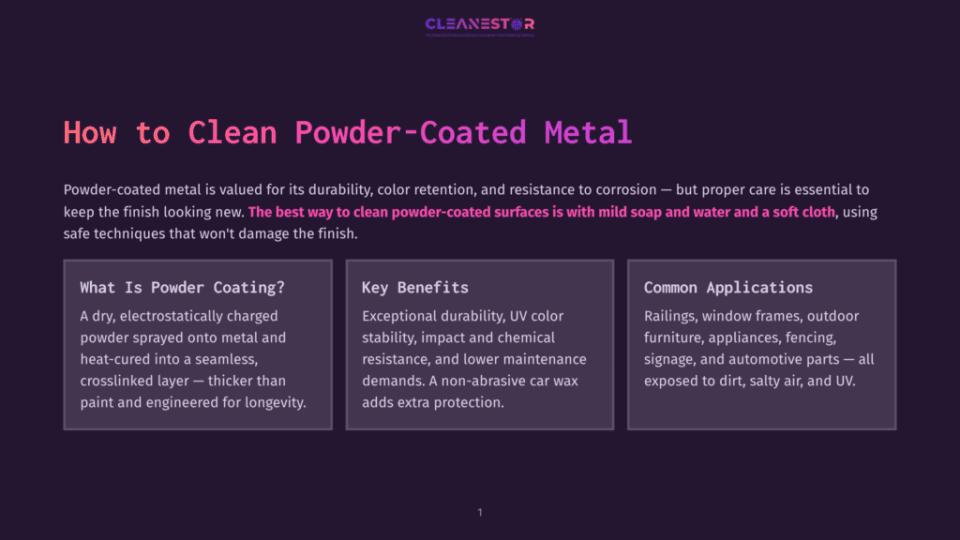
Powder-coated metal is valued for its durability, color retention, and resistance to corrosion, but proper care and maintenance are essential to keep your powder-coated finish looking new. The best way to clean powder-coated surfaces is with mild soap and water and a soft cloth, using safe techniques that won’t damage the finish.
You will learn tips on how to clean powder-coated metal, remove dirt and grime, and prevent issues that leave stains or dull a powder-coated surface. Whether you manage outdoor metal surfaces exposed to UV or an indoor metal product, the method for cleaning powder-coated surfaces here will help you clean the surface effectively and extend service life.

Understanding Powder-Coated Metals
Powder-coated metals are created by applying a dry powder to metal surfaces and curing it with heat to form a hard, protective layer. The result is a powder-coated surface that resists corrosion, chipping, and fading better than many liquid paints. Because the coating is thermoset, avoid harsh chemicals and abrasives, so selecting the right cleaner matters.
To clean powder-coated items safely, professionals typically use a mild soap and water solution and a soft cloth or sponge, then rinse with clean water to remove residue. Understanding this structure explains why pressure washing requires care and why using detergent with low alkalinity is preferred to keep your powder-coated metal intact.
What is Powder Coating?
Powder coating is a finishing process where a dry, electrostatically charged powder is sprayed onto a metal product, then cured to create a seamless, durable skin. This powder coat forms a crosslinked layer that adheres tightly to coated metal surfaces, protecting against dirt and grime, UV exposure, and moisture that can cause corrosion.
The cured film is thicker than typical paint, which is why gentle cleaning with mild soap, clean water, and a soft cloth is preferred over abrasives. Because the finish is engineered for longevity, a gentle cleaner and method for cleaning powder-coated surfaces will remove dirt without scratching or dulling the powder-coated surface.
Benefits of Powder-Coated Metal
Powder-coated metal delivers exceptional durability, color stability under UV, and resistance to impacts, chemicals, and weather. These advantages translate into lower care and maintenance demands, since you can clean powder-coated metal with mild soap and water to remove dirt and grime quickly.
The resilient powder coat helps prevent corrosion and reduces the likelihood that stains will set in, especially when you clean the surface regularly. Applying a non-abrasive car wax adds a sacrificial layer for easier cleaning and extra protection.
When you avoid harsh chemicals and abrasive tools, you preserve gloss, minimize chalking, and extend the life of metal surfaces.
Common Applications of Powder-Coated Surfaces
Powder-coated surfaces are common on architectural railings, aluminum window frames, outdoor furniture, appliances, fencing, signage, and automotive parts. These powder-coated installations often face dirt and grime, salty air, and UV, making routine cleaning essential.
To clean powder-coated items in these settings, use a mild soap, a sponge or soft cloth, and clean water, then rinse thoroughly to prevent detergent residue that could leave stains. For stubborn stain issues, a specialized cleaning product approved for powder-coated metals may help, but avoid abrasive compounds that can damage the finish.
In light industrial settings, cautious pressure washing with low pressure and wide fan tips can assist in removing dirt, provided you keep your powder coat protected by testing on a small area first.
Tips on How to Clean Powder-Coated Metal
To keep your powder-coated metal looking fresh, adopt a routine that emphasizes gentle techniques and avoids anything abrasive that could damage the finish. Use a mild soap and water mix with a soft cloth or sponge, then rinse with clean water.
Work in the shade to limit UV-heated surfaces that can flash-dry detergent and leave stains. For outdoor metal surfaces, schedule cleaning after pollen or salt exposure and consider cautious pressure washing at low pressure to aid in removing dirt.
Apply a light coat of car wax formulated for coated metal surfaces a few times per year as a sacrificial layer. Always test any cleaning product on a small powder-coated surface first.
Essential Supplies for Cleaning
Prepare a basic kit for cleaning powder-coated surfaces: a bucket, clean water, mild soap or pH-neutral detergent, and a soft cloth or sponge. Add microfiber towels for drying to prevent water spots, and use plastic-bristled brushes for textured coated metal where dirt and grime can lodge. Keep a spray bottle with premixed soap and water for quick spot cleaning.
For added protection, apply a non-abrasive car wax compatible with powder coat to keep the finish slick and easier to rinse. If using a pressure washer, choose a wide-fan tip and a low-pressure setting. Avoid harsh chemicals, solvents, and abrasive pads, which can degrade the surface and damage the finish over time.
| Item/Method | Purpose/Guidance |
|---|---|
| Bucket, clean water, mild soap or pH-neutral detergent, soft cloth/sponge | Baseline kit for cleaning powder-coated surfaces |
| Microfiber towels | Drying to prevent water spots that can stain |
| Plastic-bristled brushes | Clean textured coated metal where dirt and grime lodge |
| Spray bottle with premixed soap and water | Quick spot cleaning of powder-coated items |
| Non-abrasive car wax (compatible with powder coat) | Enhances protection; keeps the finish slick and easier to rinse |
| Pressure washer with a wide-fan tip, low pressure | Use only if necessary; gentle setting to avoid damage |
| Avoid: harsh chemicals, solvents, abrasive pads | These can degrade the powder-coated surface and damage the finish |
Step-by-Step Process for Cleaning Powder-Coated Surfaces
Begin by dry dusting the powder-coated metal to lift loose particles that could scratch. Rinse with clean water to float away grit. Mix mild soap and water, then use a soft cloth or sponge to gently clean the surface, working from top to bottom to prevent re-deposit. For stubborn spots, hold the damp cloth in place to soften buildup rather than scrubbing abrasively. Rinse thoroughly to remove detergent residue that could leave stains.
| Step | Action |
|---|---|
| Rinsing & Pressure Wash | If needed, perform light pressure washing at low pressure and a safe distance to aid in removing dirt, then rinse again. |
| Dry & Protect | Dry with microfiber towels. Finish by applying a thin layer of car wax for added protection. Inspect under good light for any remaining stain and repeat gently if required. |
Using Soap and Water for Safe Cleaning
Soap and water are the safest, most effective routine method because they lift contaminants without attacking the crosslinked film. Use a mild soap at low concentration; use a mild, pH-neutral detergent if extra cleaning power is necessary, but avoid harsh chemicals that may dull gloss or cause corrosion undercuts.
Work the solution over the powder-coated surface with a soft cloth or sponge using minimal pressure to clean powder-coated metal effectively while preventing micro-scratches. Frequent rinsing with clean water prevents the redeposition of dirt and grime.
This method for cleaning powder-coated surfaces is ideal for routine care and maintenance of outdoor and indoor metal surfaces, from railings to any metal product. After drying, optionally apply wax to help clean powder-coated items faster next time and to reduce the chance of contaminants leaving stains.
Advanced Cleaning Techniques
Advanced techniques help clean powder-coated metal when routine soap and water are not enough, especially on textured powder-coated metals or large exterior metal surfaces. Escalate safely with a pH-neutral detergent, thorough rinsing, and a protective wax layer.
For stubborn dirt and grime, a non-abrasive cleaning product approved for a powder-coated surface can assist in removing dirt without risking abrasion that could damage the finish or leave stains. Always test any cleaner on an inconspicuous coated metal surface and use a soft cloth or sponge to clean the surface methodically.
After deeper cleaning, apply car wax to restore slickness and make it easier to clean powder-coated surfaces next time, enhancing care and maintenance.
Pressure Washing Powder-Coated Metal
Pressure washing can help clean powder-coated metal efficiently, but it must be controlled to avoid a stain, lift, or gloss loss. Use low pressure (typically under 1,200 psi) and a wide fan tip to diffuse impact on the powder coat. Maintain a safe standoff distance, moving the spray in smooth, overlapping passes to aid in removing dirt and grime while preventing abrasive action.
Pre-soak with mild soap and water to loosen contaminants, then rinse with clean water. Avoid zero-degree tips, heated water near edges, or directing flow into seams where corrosion can start. Work in shade to limit UV-warmed panels that flash-dry detergent and leave stains. Finish by drying with a soft cloth and applying a light car wax on coated metal surfaces for added protection.
When to Avoid Harsh Chemicals
Avoid harsh chemicals (solvents, strong alkalis, acids, abrasive compounds) because they can dull gloss, cause micro-cracking, or undercut a powder coat, leading to corrosion. These are risky for powder-coated surfaces and may damage the finish even if they appear to clean the surface quickly. Instead, use a mild soap or a gentle detergent as your cleaner and escalate contact time rather than scrubbing.
If a specific metal product has labeling, follow the manufacturer’s tips on how to clean and only choose a cleaning product certified for powder-coated surfaces. Rinse with clean water immediately after contact to prevent residues that leave stains. When in doubt, test first and prioritize the method for cleaning powder-coated surfaces that relies on mild soap and water with a soft cloth or sponge.
Best Practices for Maintaining Clean Powder-Coated Surfaces
To keep your powder coat looking its best, adopt a regular schedule that prioritizes gentle methods. Wash monthly (outdoors) with mild soap and water, rinse, and dry. For textured coated metal surfaces, a soft sponge helps lift embedded dirt and grime without abrasive risk.
Apply car wax two to four times per year as a sacrificial barrier that makes it easier to clean powder-coated metal and reduces the chance of contaminants leaving stains. Reserve pressure washing for heavy buildup, using low pressure and wide tips.
Avoid harsh chemicals, always test any cleaner, and document care and maintenance to extend the service life of powder-coated surfaces across any metal product.
Care and Maintenance for Longevity
Gentle, consistent care is key to long-lasting powder-coated finishes. Because powder-coated metals resist corrosion and UV, routine attention with mild soap and water preserves gloss and reduces the chance of contaminants leaving stains.
One of the best ways to keep your powder coat looking fresh is to clean the surface before dirt and grime accumulate, using a soft cloth or sponge and clean water for thorough rinsing. Avoid harsh chemicals and abrasive tools; reserve low-pressure washing for heavy buildup.
Incorporate car wax on coated metal surfaces as a sacrificial barrier to ease the removal of dirt. Consistent documentation of cleaning product choices and intervals helps standardize the method for cleaning powder-coated surfaces across any metal product.
Regular Cleaning Schedules
Set a schedule based on exposure: monthly for outdoor, quarterly for sheltered, and as-needed after events.
Each session should use a mild soap solution and clean water with a soft cloth or sponge to remove dirt and grime without abrasion. Rinse thoroughly to prevent residues that can leave stains, and dry to minimize water spotting. If buildup persists, increase contact time with soap and water rather than using abrasive scrubbing.
For textured powder coat, use a gentle brush and then rinse. Pressure washing may be added sparingly at low pressure to assist in removing dirt. Logging dates, detergent concentrations, and conditions ensures repeatable results and supports long-term care and maintenance.
| Condition | Recommended Action |
|---|---|
| Exposure-based schedule | Monthly (outdoor), quarterly (sheltered), as-needed (after events) |
| General cleaning | Mild soap + clean water; soft cloth or sponge; rinse thoroughly; dry to reduce spotting |
| Persistent buildup | Increase soap-and-water contact time; avoid abrasive scrubbing |
| Textured powder coat | Use a gentle brush, then rinse |
| Pressure washing | Use sparingly at low pressure to aid dirt removal |
| Maintenance logging | Record dates, detergent concentrations, and conditions |
Waxing Powder-Coated Metal
Use a non-abrasive car wax after washing and drying to create a slick, sacrificial film that reduces adhesion of contaminants and simplifies the next clean. After washing with mild soap and water and drying, apply a thin, even coat of wax to coated metal surfaces, then buff gently with a soft cloth. This practice helps prevent a stain from pollutants, bird droppings, and hard water, and it enhances UV resistance by minimizing surface porosity.
For exterior powder-coated surfaces, repeat waxing two to four times per year, adjusting frequency for harsh climates. Choose a cleaner-wax only if it contains no abrasive particles and is labeled safe for a powder coat. Waxing is one of the best ways to keep your powder finish glossy, accelerate the removal of dirt, and reduce reliance on pressure washing.
Avoiding Damage to Powder-Coated Finishes
Preventing harm begins with product selection and technique. Use mild, pH-neutral soap or detergent and avoid strong alkalis, acids, solvents, and abrasives that can undercut the film and damage the finish. Skip abrasive pads, steel wool, or gritty cleaners that can micro-scratch a powder-coated surface and leave stains.
When pressure washing is necessary, use wide fan tips, low pressure, and maintain distance to protect the powder coat. Work in shade to limit UV-heated panels that flash-dry detergents. For sticky contaminants, soften with warm, clean water and a damp, soft cloth rather than force.
Inspect edges and fasteners on any metal product where corrosion can start, and promptly clean after salt or cement dust exposure to preserve coated metal surfaces.
As an Amazon Associate, Cleanestor earns from qualifying purchases at no additional cost to you.