
Keeping a safety vest clean is essential to maintain high visibility and extend the life of your safety gear. This guide explains instructions on how to wash and dry hi-vis apparel, including hi-vis jackets and reflective vests, without damaging the reflective tape or fluorescent color.
Interpret the care label, use a mild detergent, and avoid high heat to protect microscopic glass beads. By following proper washing instructions and drying your hi-vis correctly, your high-visibility apparel will stay visible in low-light conditions and ready for demanding work environments.
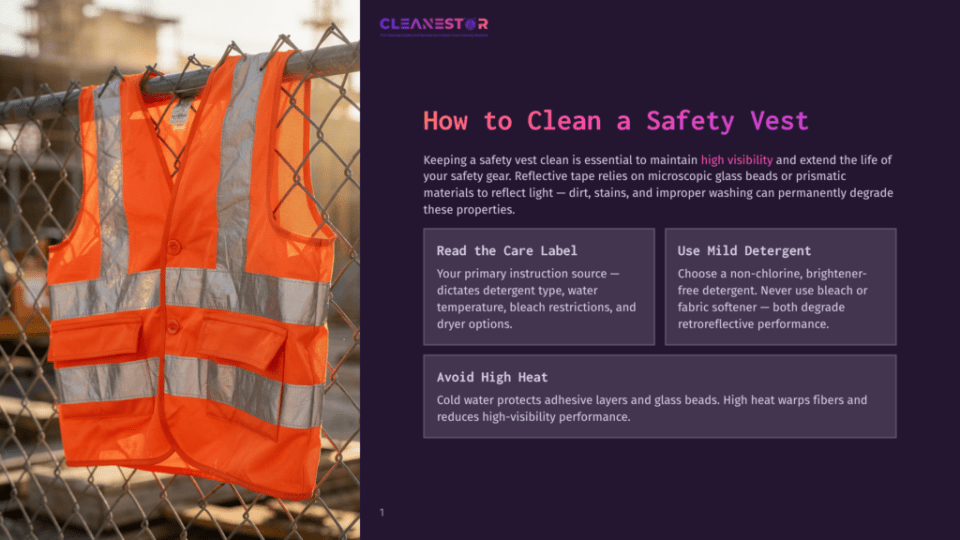

Understanding Your Safety Vest
Before you wash a safety vest, understand the garment’s construction and the purpose of its reflective tape and fluorescent fabric. High-visibility vests rely on microscopic glass beads or prismatic materials to reflect light, while the fabric provides high visibility during the day.
Each garment’s tag dictates detergent type, water temperature, and dryer options. Knowing these details helps you avoid choices like bleach, fabric softener, or high heat that can damage the reflective properties and reduce the number of washes the apparel can safely withstand.
Types of Safety Vests
There are many types of hi-vis vests and high-visibility jackets, from lightweight reflective vests for general tasks to durable hi-vis clothing with reinforced fabric for construction. Some high-visibility safety vests combine breathable mesh with reflective tape; others use solid garment panels designed for cold environments.
Hi-vis safety apparel may include glass beads embedded in the reflective areas or laminated prismatic tape. Identify your vest type to choose the correct wash method and drying approach, whether you can machine wash with like colors, and whether you should line dry to prevent heat damage.
Importance of High-Visibility Apparel
High-visibility apparel keeps workers visible in low-light conditions, around traffic, and in complex job sites.
A clean vest reflects more light and improves detectability. Stain buildup and ground-in dirt can dull fluorescent color and damage the reflective tape, undermining high visibility.
Regular laundry with a mild detergent and cold water helps preserve the microscopic glass beads that power retroreflection. Proper washing and drying reduce replacements and keep safety gear reliable.
Reading the Care Label
The care label is your primary instruction source, detailing washing instructions, whether to machine wash, the recommended detergent, and the maximum heat setting.
Look for specific care instructions such as do not use bleach, avoid fabric softener, wash with like colors, and line dry away from direct sunlight. Many tags specify cold water to protect reflective tape, and the fluorescent fabric, and some note the number of washes before performance may decline.
The label may also advise if you can use a stain remover for a stubborn stain, whether a dryer is allowed, and warnings that high heat can damage the reflective elements and overall garment.
| Instruction Type | Examples from the Care Label |
|---|---|
| Washing and Detergent | Machine wash guidance, recommended detergent, cold water, wash with like colors. |
| Restrictions and Warnings | Do not use bleach, avoid fabric softener, line dry away from direct sunlight, and high heat can damage reflective elements. |
| Drying and Heat | Whether a dryer is allowed, the maximum heat setting |
| Additional Notes | When using stain remover for stubborn stains, the number of washes before performance may decline. |
Washing Instructions for Hi-Vis Safety Vests
Effective washing instructions protect the reflective tape, fluorescent color, and fabric of your safety vest while removing dirt that reduces high visibility. Review the care label, use cold water, and avoid bleach or fabric softener. Plan to machine wash with like colors using a mild detergent, then line dry away from direct sunlight or high heat.
Following the correct heat setting and detergent guidance helps extend the life of hi-vis apparel, prevents damage to microscopic glass beads, and keeps your vest visible in low-light conditions across demanding work environments.
Preparing Your Vest for Washing
Before washing high-visibility garments, take steps to protect both the safety features and the fabric. Begin by checking for heavy stains and any loose reflective tape, and remove surface dirt to reduce abrasion.
Follow the care tag closely, and pre-treat stubborn stains after testing in a hidden spot. Then, prepare the garment and your load as follows:
- Close all zippers, secure hook-and-loop tabs, and empty pockets to protect safety gear and the washer drum.
- Read and follow care instructions, including warnings such as do not use bleach, avoid fabric softener, and use the recommended water temperature.
- Gently brush off surface dirt before laundering to reduce abrasion to high-visibility fabric.
- Pre-treat stubborn stains with a compatible stain remover after spot testing.
- Turn garments inside out and sort with like colors to shield reflective vests from friction and prevent dye transfer.
Recommended Washing Methods
Use a gentle cycle and a mild detergent for most hi-vis vests and high-visibility safety vests. Choose washing reflective practices that minimize agitation to protect glass beads and prevent you from damaging the reflective tape.
For delicate hi-vis clothing or older apparel nearing its number of washes, consider placing the garment in a mesh bag or opting for hand washing. Never use bleach or fabric softener, as both degrade retroreflective performance and fluorescent color.
Rinse thoroughly to remove detergent residue, which can dull high-visibility. After washing, line dry or hang to dry; avoid a dryer unless the care label clearly permits a low heat setting.
Water Temperature and Detergent Selection
Cold water is generally preferred for hi-vis apparel because it safeguards microscopic glass beads and adhesive layers that bond reflective tape to the garment. Warm water may be acceptable if the care label allows, but avoid high heat that can distort fibers and reduce high-visibility performance.
Select a mild, non-chlorine detergent without optical brighteners. Use only the amount recommended; excess detergent leaves residue that attracts dirt. Do not use bleach or fabric softener, as both can permanently affect reflective vests.
For a tough stain, apply a compatible stain remover sparingly, then rinse and line dry out of direct sunlight.
Drying Your Hi-Vis Jacket
Drying your hi-vis apparel is as critical as the wash itself because heat, friction, and sunlight can damage the reflective tape and fluorescent color.
After you machine wash or hand wash a safety vest, remove it promptly to reduce wrinkles and water marks that trap dirt. Follow the care label and care instructions on the tag regarding heat setting and whether a dryer is permitted.
When in doubt, line dry in the shade to protect microscopic glass beads and adhesive layers. Proper drying of your hi-vis practices helps extend the life of high-visibility vests, keeps them visible in low-light conditions, and reduces the need for replacement vests.
Best Practices for Drying
Gently reshape the garment after laundry, then line dry or hang to dry away from direct sunlight and high heat.
Place the vest, shirt, or jacket on a wide hanger to avoid creasing reflective tape, and keep airflow moving to dry evenly.
If the tag allows a dryer, choose the lowest heat setting and a short cycle; remove while slightly damp and finish with air drying to protect glass beads. Avoid overcrowded drying areas where fabrics rub and generate friction.
Check washing instructions for specific time and temperature guidance, and always dry with like colors to prevent dye transfer onto clean hi-vis apparel.
Avoiding Common Drying Mistakes
Avoid bleach, fabric softener sheets, and high heat in the dryer, as they can damage the reflective tape and degrade fluorescent fabric.
Do not wring or twist the garment, which can crack prismatic layers and cause a stubborn stain to set. Avoid placing hi-vis vests on radiators, dashboards, or in direct sunlight; UV and heat can dull high visibility. Skipping the care label instruction risks shortening the number of washes your safety gear can withstand.
Keep dirt and oils off drying racks, and do not iron reflective vests. If you use a stain remover, rinse thoroughly before drying to prevent residue rings.
Air Drying vs. Machine Drying
Air drying is the safest method for hi-vis clothing because it eliminates heat exposure that may damage the reflective areas and adhesive holding glass beads. Line dry in shade with good ventilation to preserve high-visibility performance and color.
Machine drying is acceptable only when the tag explicitly permits it; use a delicate cycle and the lowest heat setting, then promptly remove to minimize friction. Air drying typically extends the life of high-visibility safety vests and hi-vis jackets, while frequent tumble drying can age the garment faster.
Choose the approach that aligns with your washing instructions to keep your safety vest clean, hi-vis, and ready for demanding work clothes.
Stain Removal Techniques
Targeted stain removal protects high visibility while preserving reflective tape and fluorescent color. Start with the care label and test any stain remover. Work from the outside of the stain inward to avoid spreading dirt across the garment. Always pretest solutions on an inconspicuous area of the safety vest, shirt, or jacket.
Use cold water and a mild detergent to lift most grime before you wash. Avoid bleach and fabric softener, which can damage the reflective areas and adhesive holding glass beads. After treatment, machine wash with like colors and line dry away from direct sunlight.
Identifying Common Stains on Safety Vests
Safety gear encounters oil, grease, asphalt, sweat, beverage spills, and ground-in dirt that clouds high-visibility.
Fluorescent fabric traps fine dust while reflective vests collect diesel residue that can dull glass beads. Paint overspray, rust, and concrete splatter often harden on the garment, and food-based stains can wick along fibers in hi-vis apparel.
Identify the stain type (protein, petroleum, mineral) so the washing instructions and treatment match. Note that if the buildup sits on reflective tape, aggressive scrubbing could damage the reflective tape. Document the number of washes already performed; older hi-vis vests may require gentler methods to extend their life.
Effective Stain Treatment Methods
For general grime, flush with cold water, then massage a mild detergent into the fabric using a soft cloth. Use solvent-free, enzyme-safe pre-treaters for petroleum stains; keep water cool for protein stains. On reflective tape, dab rather than scrub to protect microscopic glass beads.
If permitted by the tag, use a stain remover formulated for hi-vis clothing, then rinse thoroughly. Machine wash on gentle with like colors per care instructions, and line dry to inspect results; high heat in a dryer can set stains and degrade hi-vis safety apparel.
Preventing Future Stains
Brush off loose dirt and spot-clean promptly with cold water during shifts. Store the vest and jacket away from oils and solvents, and avoid sitting on dirty equipment that transfers grime to high-visibility vests.
Follow washing reflective best practices: machine wash with a mild detergent, avoid fabric softener, and choose a low heat setting only if the instruction tag allows.
Always line dry in shade to keep a clean hi-vis finish and reduce residue rings. Rotate multiple pieces of safety equipment to lower wear, and track the number of washes to plan timely replacement of vests.
Extending the Life of Your Hi-Vis Apparel
To extend the life of hi-vis apparel, pair precise washing instructions with conservative drying in your hi-vis practices. Use cold water, mild detergent, and gentle agitation to protect adhesive layers and glass beads. Never use bleach or fabric softener, both of which can dull fluorescent color and damage the reflective tape.
Line dry away from direct sunlight, and only use a dryer on the lowest heat setting if the care label permits. Inspect each garment after laundry to catch loose tape or excessive fading early. Consistent maintenance keeps safety gear visible and delays replacements.
Regular Maintenance Tips
After each shift, shake off dust and spot-clean the vest to limit buildup that stresses the fabric during wash. Close zippers and hook-and-loop before you wash safety vests, and turn the garment inside out to reduce friction on reflective tape. Machine wash with like colors in cold water, using a measured dose of mild detergent.
Rinse thoroughly to prevent residue that attracts dirt. Line dry or hang to dry in shade, reshaping panels of hi-vis jackets and shirts. Keep the tag readable by avoiding harsh chemicals. Store high-visibility safety vests flat or on wide hangers to prevent creases that can crack reflective areas.
When to Replace Your Safety Vest
Replace vests when visibility declines or reflective tape peels, cracks, or stops returning light.
Retire apparel if fluorescent color fades significantly, the fabric thins, or stains permanently obscure panels. Follow the manufacturer’s wash-count guideline on the care label; exceeding it can reduce performance visible in low-light conditions.
Damage from high heat, solvents, or incorrect detergent is another trigger. If repairs cannot meet safety requirements, opt for replacement vests to maintain compliant safety equipment and ensure hi-vis vests and high-visibility jackets remain reliable at work.
Common Mistakes to Avoid When Caring for Hi-Vis Safety Gear
Avoid bleach, fabric softener, harsh detergents, and high heat that can damage reflective tape and fluorescent fabric. Do not ignore the instruction tag or care instructions regarding heat setting; high heat in a dryer or direct sunlight can warp adhesives and fade color.
Skip aggressive scrubbing that scuffs glass beads, and never wring the garment. Do not overload the washer, which grinds dirt into fibers, or mix with non-like colors that can transfer dye. Skipping thorough rinsing leaves residue that attracts grime. Treat stains promptly and follow the care label to extend the life of hi-vis clothing.
How to Clean Personal Protective Equipment
As an Amazon Associate, Cleanestor earns from qualifying purchases at no additional cost to you.