
Keeping a moped exhaust in peak condition is essential for safe, efficient riding and long engine life. This guide explains exhaust cleaning fundamentals and outlines a practical, step-by-step process to clean out the carbon from the exhaust pipe, muffler, and chamber.
Whether you ride a 2-stroke moped, a small scooter, or a lightweight motorcycle, understanding how to remove carbon deposits, sludge, and rust will help restore performance.
We will cover safe use of solvent options like degreaser, oven cleaner, acetone, and even caustic soda, as well as diy techniques using a wire brush, steel wool, scotch brite, and compressed air.

Understanding the Importance of Exhaust Cleaning
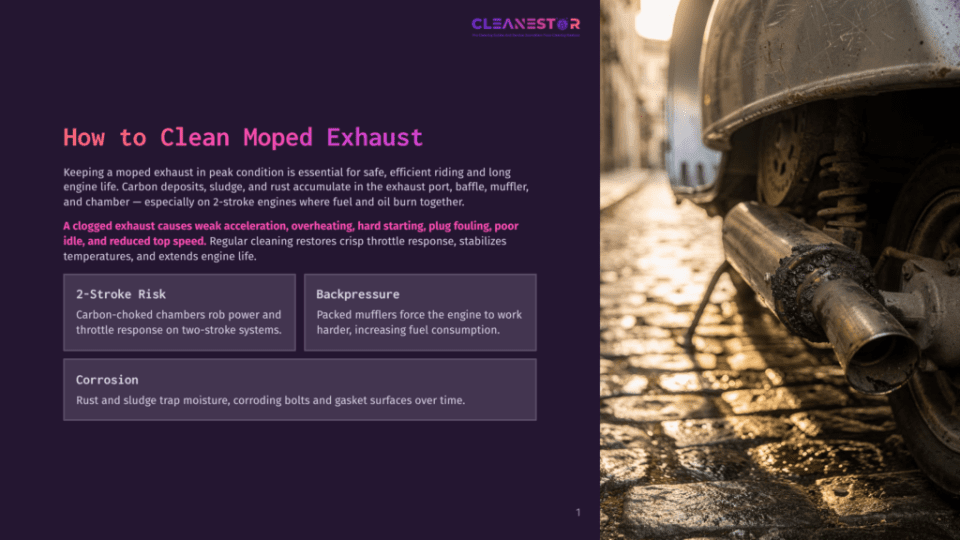
Exhaust cleaning directly affects how well the engine breathes. Over time, the exhaust port, baffle, and end of the exhaust accumulate carbon, oil, and dirt, especially on a two-stroke, where fuel and oil burn together. These carbon deposits can clog passages, restricting flow and causing an inefficient burn.
By periodically inspecting the entire exhaust, checking each bolt, plug, and gasket, and using an appropriate cleaner or solvent, you prevent a clogged exhaust, protect paint from heat stress, and maintain consistent power. Proper washing, a thorough drain after soak, and careful reassembly ensure reliable sealing and performance.
Why Clean Your Moped Exhaust?
Cleaning the moped exhaust helps the engine evacuate gases efficiently, allowing fresh fuel-air mix to enter the cylinder. On a 2-stroke or two-stroke, exhaust tuning is critical; a dirty muffler or carbon-choked chamber robs power and throttle response.
Regularly remove the pipe, inspect the exhaust port, and clean out the carbon to avoid sluggish acceleration and excessive smoke. A diy routine using a degreaser, oven cleaner, or soda and water can dissolve sludge, while a wire brush, steel wool, and Scotch Brite can scrub stubborn deposits.
Finishing with compressed air to blow passages clear restores crisp performance.
Common Issues Caused by a Clogged Exhaust
A clogged exhaust can cause weak acceleration, overheating, hard starting, plug fouling, and poor idle. Backpressure increases when the muffler or baffle fills with carbon deposits, making the engine work harder to push out gases. Riders may notice a dull exhaust note, reduced top speed, and excessive fuel consumption.
In severe cases, the bike can stall under load or refuse to rev, especially on small Suzuki-style mopeds and scooters sensitive to pipe resonance. Rust and sludge also trap moisture, corroding bolts and the gasket surfaces. If the exhaust pipe is loose or the chamber is packed, the best way forward is to remove the entire exhaust and thoroughly clean, soak, and drain it.
Benefits of Regular Maintenance
Routine exhaust cleaning extends engine life, stabilizes temperatures, and preserves performance.
By proactively removing carbon and dirt, you maintain designed flow characteristics, improve throttle response, and keep the plug cleaner. Scheduled inspections catch a failing gasket, cracked paint, or rusted bolt before they escalate.
Careful use of solvent, a controlled soak, and a thorough wash safeguard the metal while minimizing sludge buildup. Finishing touches like a light wire brush on the exhaust port and a blow-through with compressed air ensure no residue remains.
For 2-stroke systems, regular cleaning sustains performance without harsh torch or flame methods.
Tools and Materials Needed for Exhaust Cleaning
Selecting the right tools and materials streamlines exhaust cleaning, reduces risk to the engine, and helps clean out the carbon thoroughly from the entire exhaust.
For a moped, scooter, or small motorcycle, you will need hand tools to remove the exhaust pipe and muffler, abrasive tools to scrub carbon deposits, and chemical cleaners to dissolve sludge and dirt. Complement these with a hose for washing, containers to soak parts, and compressed air to blow passages clear.
Always plan to inspect the exhaust port, baffle, and outlet, and be ready to replace damaged gaskets or bolts.
Essential Tools for Cleaning the Exhaust Pipe
At minimum, you need a quality socket set and spanners to remove bolts and the plug fasteners that hold the exhaust pipe and muffler to the bike. A sturdy wire brush, Scotch Brite pads, and steel wool help scrub carbon deposits from the chamber and baffle without gouging the metal or paint.
A length of wire can probe a stubborn hole or the end of the exhaust where clogs form. Use a hose and a bucket for washing and to drain after a soak, then blow passages with compressed air. Keep a torque wrench to reinstall correctly and prevent leaks at the exhaust port.
| Tool/Item | Purpose |
|---|---|
| Socket set and spanners | Remove bolts and plug fasteners on the exhaust pipe and muffler |
| Wire brush, Scotch Brite pads, steel wool | Scrub carbon deposits without damaging metal or paint |
| Length of wire | Probe stubborn holes or the exhaust end where clogs form |
| Hose and bucket | Wash parts, soak, and drain |
| Compressed air | Blow out passages after washing |
| Torque wrench | Reinstall correctly and prevent leaks at the exhaust port |
Recommended Cleaners for Moped Exhaust
Match the cleaner to the deposit: degreaser or soda for light grime; oven cleaner or acetone for heavy carbon; caustic soda for severe buildup with strict safety.
Apply spray products evenly, allow time to burn through buildup chemically, then rinse with a hose and drain thoroughly. Avoid aggressive oxy, torch, and flame methods on painted mufflers.
For DIY users, many recommend staged soaks, followed by a final blow with compressed air to purge any remaining sludge.
| Deposit Type | Recommended Cleaner |
|---|---|
| Light grime | Degreaser or soda |
| Heavy carbon | Oven cleaner or acetone |
| Severe buildup | Caustic soda (use with strict safety) |
Safety Gear and Precautions
Wear chemical-resistant gloves and goggles, work in a well-ventilated area, and keep away from flames.
Protect the paint by masking areas before exhaust cleaning, and keep water away from the engine intake and plug. Never mix chemicals; always add soda to water.
Inspect the gasket, each bolt, and the exhaust port sealing surfaces after cleaning, and replace damaged parts. Finally, rinse, wash, and drain thoroughly, then blow dry with compressed air to avoid internal rust.
Step-by-Step Process to Clean Your Moped Exhaust
This step-by-step process focuses on practical exhaust cleaning that is safe for a moped, scooter, or small motorcycle. You will remove the entire exhaust, clean out the carbon from the pipe, muffler, and chamber, and verify the exhaust port is clear of carbon deposits.
The best way is a staged approach: preparation, soak and scrub, rinse and drain, then blow-through with compressed air. Throughout, use appropriate cleaner options such as degreaser, soda and water, oven cleaner, acetone, or carefully handled caustic soda for stubborn sludge.
Work methodically to avoid a clogged exhaust, protect paint, and keep each bolt, plug, and gasket in good condition.
Preparation: What to Do Before Starting
Before working on the bike’s exhaust, make sure you create a safe setup and gather what you need. Follow these steps in order for a smooth and safe process:
- Choose cleaners based on deposit severity, reserving caustic soda for the worst 2-stroke buildup.
- Cleaning the Exhaust Pipe and Muffler
- Rinse thoroughly and blow dry with compressed air to prevent rust
Using a Plug to Assess Clogs
After initial cleaning, reinstall the exhaust loosely and use a temporary plug at the exhaust outlet to assess for a clog. Start the engine briefly; if pressure builds quickly and you hear leaks around a joint, a clogged exhaust, or a blocked chamber may remain.
Shut down, need to remove the pipe again, and probe the end of the exhaust and baffle with a wire to locate a stubborn hole blocked by carbon deposits. Repeat a targeted soak with solvent or oven cleaner, then wash and drain. Refit with a fresh gasket, torque bolts properly, and perform a final compressed-air blow.
Post-Cleaning Maintenance Tips
After you clean the exhaust and reinstall the entire exhaust assembly, treat maintenance as a routine to prevent a future clogged exhaust. Inspect the exhaust pipe, muffler, bolts, plug, and gasket after the first ride to verify no leaks at the exhaust port or end of the exhaust.
Lightly spray a corrosion inhibitor to protect paint and reduce rust on exposed steel. Keep a diary of hours or fuel used between services to time a soak or washing before carbon deposits return. A quick compressed-air blow after wet rides helps prevent internal rust and moisture buildup.
How to Prevent Future Clogs
Use quality fuel and correct jetting; warm the engine fully before shutdown to evaporate condensate inside the exhaust. After rides in the rain, remove the plug briefly and blow the pipe with compressed air to drive out water, then drain any residue.
Schedule a light diy rinse: pour a mild degreaser or soda and water through the exhaust, wash with a hose, and let it fully dry. Inspect each bolt, gasket, and the exhaust port, and periodically probe the baffle holes with a wire to keep the chamber breathing.
Recommended Practices for 2-Stroke Exhaust Systems
For a two-stroke or 2-stroke exhaust, carbon control is paramount. Run the correct oil ratio, avoid extended idling, and give the bike occasional hard runs to keep deposits soft.
Every few months, need to remove the pipe to clean out the carbon: a short soak with a suitable cleaner such as oven cleaner, acetone, or a carefully handled caustic soda solution, followed by washing and a thorough drain.
Use Scotch Brite, a wire brush, and steel wool to clear the baffle and chamber, then blow passages with compressed air. Avoid torch, oxy, or flame on painted parts to protect the finish and gasket surfaces.
When to Seek Professional Help
Seek a professional for heavy rust, loose internals, repeated clogs, or persistent backpressure after cleaning. Persistent backpressure, oil drip at the end of the exhaust, or a Suzuki or similar scooter that refuses to rev after you clean, spray, and rinse may indicate deeper engine or exhaust port issues.
A shop can pressure test the entire exhaust, weld cracked joints, and replace a collapsed muffler core. If handling caustic soda or acetone is beyond your comfort level, a technician can perform a controlled soak, wash, and drain safely, then torque each bolt and reinstall the plug and gasket to spec.
Conclusion: Keeping Your Moped in Top Shape
Keeping a moped, scooter, or small motorcycle in peak condition hinges on disciplined exhaust cleaning and inspection.
The best practice is a recurring cycle: inspect, remove, soak with the right cleaner, rinse, drain, and blow dry. Address carbon deposits early to protect the chamber, baffle, and exhaust port, and always safeguard paint and gaskets.
Avoid torch or flame methods near a barbecue or coal fire, favoring controlled solvent approaches such as degreaser, soda and water, or oven cleaner. With careful reassembly—fresh gasket, correct bolt torque, and leak checks—your engine breathes freely and resists clog and rust long term.
Final Thoughts on Exhaust Maintenance
Exhaust maintenance is an ongoing habit that delivers reliable starts, crisp power, and long service life.
A clean pipe and muffler enable efficient burn, stable idle, and strong throttle response. Plan periodic diy sessions to clean out the carbon, using wire, scotch brite, and steel wool for deposits, and reserve caustic soda only for severe two-stroke buildup.
After washing, always drain and blow with compressed air to prevent internal rust. Keep goggles and a glove set handy, label solvents, and never mix chemicals.
Resources for Moped Enthusiasts
Build a toolkit of trustworthy references and suppliers for exhaust cleaning. Look for service manuals covering your exhaust pipe, gasket specs, and bolt torque. Parts houses can recommend compatible cleaner options, from degreaser to acetone, and supply replacement baffle packing where applicable.
Online communities curate diy soak techniques, oven cleaner dwell times, and tips to blow stubborn holes clear with compressed air. Video walkthroughs demonstrate safe pour-and-drain methods and how to inspect the end of the exhaust and exhaust port.
Keep links to torque charts, solvent safety sheets, and rust inhibitors to protect paint and extend the life of the entire exhaust assembly.
Joining the Moped Army Community
The Moped Army forum is an invaluable hub for riders refining their exhaust cleaning process. Members share step-by-step photos of how they remove the pipe, wire-brush the chamber, and select a solvent for specific carbon deposits.
You will find model-specific advice for Suzuki-style mopeds, sourcing gaskets and bolts, and verifying a clog with a temporary plug test. Discussions cover safe handling of caustic soda, acetone, and oven cleaner, plus alternatives that won’t harm paint.
Join to compare results, troubleshoot stubborn clogs, and learn proven wash, drain, and blow-dry methods.
How to: Clean an exhaust from the inside!
As an Amazon Associate, Cleanestor earns from qualifying purchases at no additional cost to you.