
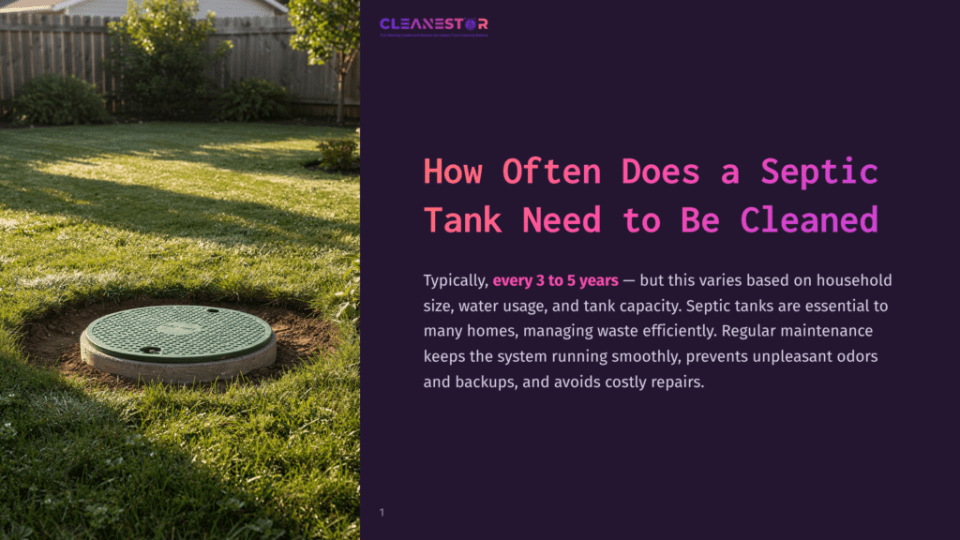
How often does a septic tank need to be cleaned? Typically, every 3 to 5 years.
This can vary based on usage and tank size. Septic tanks are an essential part of many homes. They manage waste efficiently. But, they need regular maintenance to function well. Neglecting this can lead to costly repairs. Understanding the cleaning schedule helps avoid problems.
Regular cleaning ensures the system works smoothly. It also prevents unpleasant odors and backups. Homeowners often wonder about the ideal cleaning frequency. Knowing this can save money and stress. In this blog, we will explore the factors that influence how often a septic tank should be cleaned. This will help you maintain a healthy septic system.

Importance Of Septic Tank Maintenance
Maintaining your septic tank is crucial for a healthy home environment. Regular cleaning prevents costly repairs and keeps your system running smoothly. Ignoring maintenance can lead to severe problems that affect both your home and the environment.
Preventing System Failures
A well-maintained septic tank helps prevent system failures. Regular cleaning removes solid waste that can clog the system. Clogs can cause backups, leading to unpleasant odors and potential damage to your property. By scheduling regular maintenance, you reduce the risk of these issues.
Here are some key points to consider:
- Regular inspections catch problems early.
- Pumping the tank removes built-up waste.
- Avoiding harsh chemicals protects beneficial bacteria in the system.
Health And Environmental Benefits
Maintaining your septic tank also has health and environmental benefits. A clean system prevents harmful bacteria from contaminating groundwater. This is essential for your health and the well-being of the community.
Consider these benefits:
- Prevents water contamination.
- Protects local wildlife.
- Reduces the spread of diseases.
By keeping your septic tank clean, you contribute to a healthier environment. Regular maintenance ensures your system works efficiently, protecting both your home and nature.

Credit: a1plumbingfl.com
Factors Influencing Cleaning Frequency
Cleaning your septic tank regularly is crucial for maintaining its efficiency and longevity. Various factors influence how often you need to clean your septic tank. Understanding these factors helps you schedule cleaning at the right intervals, preventing costly repairs and system failures.
Household Size
Household size significantly impacts the frequency of septic tank cleaning. More people in the house means more water usage, leading to quicker waste build-up in the tank. For example, a family of four may need to clean their tank every three years. A smaller household might extend this to five years.
Water Usage Habits
Your water usage habits also play a vital role. Frequent use of washing machines, dishwashers, and long showers can lead to faster filling of the septic tank. Using water-saving appliances and fixing leaks can help reduce the need for frequent cleaning.
System Size And Design
The size and design of your septic system are critical factors. Larger tanks require less frequent cleaning compared to smaller ones. The design, such as the type of filter and drainage field, also affects how often you should clean the tank.
| Factor | Impact on Cleaning Frequency |
|---|---|
| Household Size | More people = More frequent cleaning |
| Water Usage Habits | High usage = Faster tank fill-up |
| System Size and Design | Smaller tanks = More frequent cleaning |
Typical Cleaning Intervals
Understanding how often to clean a septic tank is essential for maintaining a healthy system. Regular cleaning prevents blockages and costly repairs. Below are the typical cleaning intervals and some signs that indicate it’s time for a cleaning.
General Recommendations
Experts recommend cleaning your septic tank every 3 to 5 years. The exact frequency depends on the size of your tank and household usage. A family of four with a 1,000-gallon tank should aim for every 3 years.
| Household Size | Tank Size | Cleaning Frequency |
|---|---|---|
| 1-2 people | 500 gallons | Every 5 years |
| 3-4 people | 1,000 gallons | Every 3 years |
| 5+ people | 1,500+ gallons | Every 2 years |
Signs It’s Time For Cleaning
Knowing the signs of a full septic tank helps avoid problems. Here are common indicators:
- Slow drains in sinks and tubs.
- Bad odors around the septic tank or drains.
- Pooling water in the yard near the tank.
- Backups in toilets and drains.
If you notice these signs, schedule a cleaning immediately. Ignoring them can lead to severe damage and expensive repairs.
Consequences Of Neglecting Cleaning
Neglecting to clean your septic tank can lead to severe problems. Regular maintenance is crucial for a healthy home environment. Ignoring this task can have dire consequences. Below are the main issues that arise from neglecting septic tank cleaning.
System Backups
Failure to clean your septic tank can result in system backups. Wastewater may no longer flow properly. This can cause toilets, sinks, and drains to overflow. Dealing with such a mess is both unpleasant and costly. Regular cleaning prevents these troublesome backups.
Costly Repairs
Skipping septic tank cleaning can lead to costly repairs. Waste build-up can damage the tank and pipes. This can result in cracks and leaks. Repairing or replacing a septic system is expensive. Investing in regular cleaning can save money in the long run.
Health Risks
Unclean septic tanks pose serious health risks. Overflowing wastewater contains harmful bacteria and pathogens. These can contaminate your home’s water supply. This puts your family’s health at risk. Regular cleaning ensures a safer, healthier environment.
DIY Vs. Professional Cleaning
Cleaning a septic tank is crucial. You might wonder whether to do it yourself or hire a professional. Both options have their advantages and drawbacks. Let’s explore these in detail.
Pros And Cons Of Diy
Handling septic tank cleaning yourself can save money. You won’t need to pay for labor. This can be appealing, especially if you enjoy hands-on work.
DIY cleaning, however, has risks. It can be messy and challenging. You need the right tools and knowledge. Mistakes can lead to bigger problems. This could mean higher costs later.
You should also consider safety. Septic tanks contain harmful bacteria. Proper precautions are essential. Without experience, you might face health risks.
Benefits Of Hiring Professionals
Professionals bring expertise. They know how to clean septic tanks efficiently. They have the right tools and equipment. This ensures a thorough job.
Hiring professionals also means less risk. They follow safety protocols. This reduces the chances of accidents or health issues. You can have peace of mind.
Professionals can spot problems early. They can identify issues you might miss. This can save you money in the long run. Prevention is often cheaper than repairs.
Choosing professionals also means convenience. You save time and effort. This can be valuable, especially with a busy schedule.

Credit: sensorex.com
Steps For Regular Maintenance
Regular maintenance of your septic tank is crucial for its longevity. Proper care prevents costly repairs and ensures your system works efficiently. Follow these steps for regular maintenance to keep your septic tank in top condition.
Regular Inspections
Schedule inspections every three years. A professional should check for leaks and sludge levels. Regular inspections help spot problems early. This saves you money and stress.
Proper Waste Disposal
Dispose of waste properly. Avoid flushing non-biodegradable items. Items like diapers, wipes, and grease can clog the system. Use the trash for such items. Limit the use of harsh chemicals. They can kill beneficial bacteria in the tank. Stick to septic-safe products.
Use Of Additives
Additives can help maintain a healthy balance. They boost the bacteria that break down waste. Choose additives designed for septic systems. Follow the manufacturer’s instructions carefully. Overusing additives can harm your tank. Keep it simple and effective.
Tips For Reducing Cleaning Frequency
Keeping your septic tank clean is crucial for a healthy home. Fortunately, there are ways to reduce the frequency of cleaning. By making small changes, you can extend the time between professional cleanings and save money.
Water Conservation Tips
Using less water can help your septic system work more efficiently. Here are some tips:
- Fix leaky faucets and toilets right away.
- Install low-flow showerheads and toilets.
- Run dishwashers and washing machines with full loads only.
- Take shorter showers.
These simple steps can reduce the strain on your septic system.
Avoiding Non-biodegradable Waste
What you flush or pour down the drain affects your septic tank. Here’s a list of things to avoid:
- Coffee grounds
- Feminine hygiene products
- Paper towels
- Cooking oil and grease
- Chemicals like paint or household cleaners
Disposing of these items properly will help your septic system function better.
Regular Pumping Schedule
Even with good practices, septic tanks need regular pumping. Follow these guidelines:
| Household Size | Tank Size | Pumping Frequency |
|---|---|---|
| 1-2 people | 500-1000 gallons | Every 3-5 years |
| 3-4 people | 1000-1500 gallons | Every 2-4 years |
| 5-6 people | 1500-2000 gallons | Every 1-3 years |
Keeping to a schedule ensures your system remains efficient and prevents costly repairs.
Choosing A Septic Tank Service Provider
Selecting the right septic tank service provider is crucial for maintaining your septic system. A reliable provider ensures your tank is cleaned efficiently and on time. This section will guide you through the key aspects to consider.
What To Look For
When choosing a service provider, consider these important factors:
- Experience: Look for a company with several years in the industry.
- Reputation: Check online reviews and ask for references.
- Certifications: Ensure the company has the necessary licenses and certifications.
- Equipment: Verify they use modern and well-maintained equipment.
Questions To Ask
Ask potential providers these questions to ensure they meet your needs:
- How long have you been in business? Experience matters.
- Can you provide references? Speak with past customers.
- What are your rates? Get a clear understanding of costs.
- Do you offer emergency services? Emergencies can happen anytime.
Cost Considerations
Understanding the costs involved is vital. Here’s what you need to know:
| Service | Average Cost |
|---|---|
| Basic Cleaning | $200 – $300 |
| Inspection | $100 – $150 |
| Emergency Service | $300 – $500 |
Remember, the cheapest option is not always the best. Consider the overall value and the quality of service.
Frequently Asked Questions
How Often Should A Septic Tank Be Pumped?
A septic tank should be pumped every 3 to 5 years. The frequency depends on the tank size and household usage.
What Are Signs A Septic Tank Needs Cleaning?
Slow drains, bad odors, and pooling water are signs your septic tank needs cleaning. Regular maintenance can prevent these issues.
Can I Clean My Septic Tank Myself?
Cleaning a septic tank yourself is not recommended. It requires professional equipment and expertise to ensure proper and safe cleaning.
What Happens If You Don’t Clean A Septic Tank?
If you don’t clean a septic tank, it can cause system failure. This leads to backups, bad odors, and costly repairs.
Conclusion
Regular septic tank cleaning is crucial for a healthy system. A typical schedule is every three to five years. Proper maintenance prevents blockages and costly repairs. Always consult a professional for advice tailored to your situation. Regular checks ensure your septic system functions smoothly.
Don’t ignore it; small actions make a big difference. Keep your septic tank in top shape. It’s a simple way to avoid major issues.
As an Amazon Associate, Cleanestor earns from qualifying purchases at no additional cost to you.