
Cleaning, sanitation, and storage of food contact items are crucial. They ensure food safety and prevent contamination.
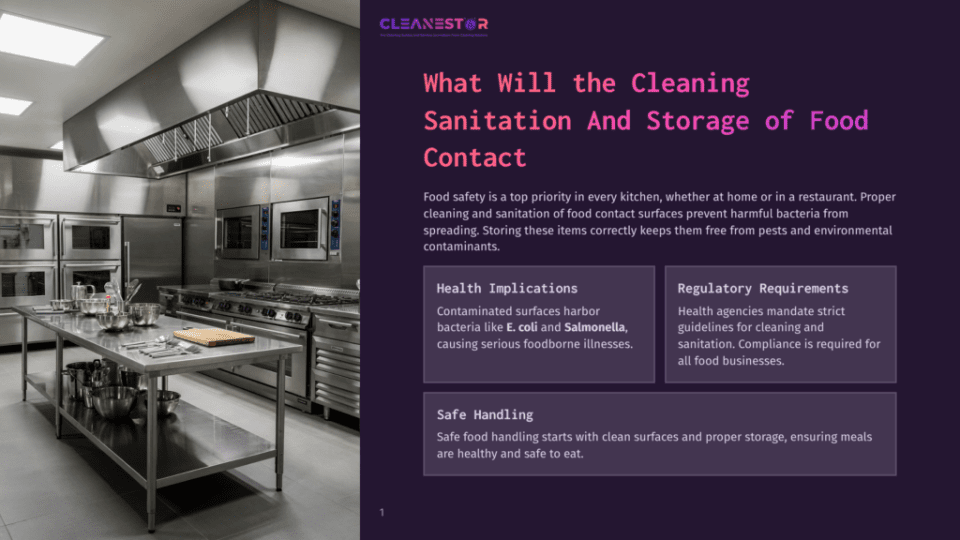
Food safety is a top priority in every kitchen, whether at home or in a restaurant. Proper cleaning and sanitation of food contact surfaces prevent harmful bacteria from spreading. Storing these items correctly keeps them free from pests and environmental contaminants.
This blog post will explore the best practices for cleaning, sanitizing, and storing food contact items. You will learn simple, effective steps to maintain a clean and safe kitchen environment. Safe food handling starts with clean surfaces and proper storage, ensuring your meals are healthy and safe to eat.

Importance Of Food Contact Surfaces
The importance of food contact surfaces cannot be overstated. These surfaces are the points where food comes into direct contact. Proper cleaning, sanitation, and storage are critical. They prevent contamination and ensure food safety.
Health Implications
Food contact surfaces affect our health directly. Contaminated surfaces can harbor harmful bacteria. Bacteria like E. coli and Salmonella can cause serious illnesses. Cleaning these surfaces reduces the risk of foodborne diseases. It keeps consumers safe and healthy.
Regulatory Requirements
There are strict regulations for food contact surfaces. Health agencies have set guidelines for cleaning and sanitation. These regulations ensure that food processing areas are safe. Compliance with these rules is mandatory for businesses. It helps prevent contamination and ensures food safety for consumers.
Types Of Food Contact Surfaces
Understanding the types of food contact surfaces is crucial. Different materials are used in the industry. Each has unique properties and benefits. Knowing these can help in making informed choices. Let’s explore some common materials.
Common Materials
Food contact surfaces come in various materials. Here are some of the most common:
- Stainless Steel
- Plastic
- Wood
- Glass
Pros And Cons
| Material | Pros | Cons |
|---|---|---|
| Stainless Steel |
|
|
| Plastic |
|
|
| Wood |
|
|
| Glass |
|
|
Cleaning Methods
Effective cleaning methods are crucial for maintaining food safety. Proper cleaning ensures the removal of harmful bacteria and other contaminants. This safeguards the health of consumers. Here, we discuss two main cleaning methods: manual cleaning and automated systems.
Manual Cleaning
Manual cleaning involves cleaning by hand using brushes, cloths, and detergents. It allows for detailed attention to hard-to-reach areas. Workers can spot and remove stubborn residues. This method is flexible and can be adjusted based on the surface being cleaned. It does, however, require time and labor. Proper training is essential to ensure thorough cleaning. Regular checks are needed to maintain high cleanliness standards.
Automated Systems
Automated systems use machines to clean food contact surfaces. These systems can include dishwashers, CIP (Clean-In-Place) systems, and robotic cleaners. They offer consistent and efficient cleaning. Automated systems save time and reduce labor costs. They are ideal for large-scale operations. Regular maintenance is necessary to keep these systems running smoothly. Automation minimizes human error and ensures a high level of hygiene.

Credit: www.fooddocs.com
Sanitation Techniques
Ensuring the cleanliness and safety of food contact surfaces is crucial. Proper sanitation techniques prevent contamination and maintain food safety. Below are effective methods to keep these surfaces clean.
Chemical Sanitizers
Chemical sanitizers are widely used in the food industry. These chemicals kill bacteria and other pathogens. They ensure surfaces are safe for food contact.
Common chemical sanitizers include:
- Chlorine-based sanitizers: Effective against a broad range of microbes. They are affordable and easy to use.
- Quaternary ammonium compounds (Quats): Non-corrosive and stable. They have a long-lasting effect.
- Iodophors: Effective at lower temperatures. They are less irritating to skin.
Always follow the manufacturer’s instructions for proper use. Ensure proper concentration and contact time. This maximizes the effectiveness of the sanitizers.
Heat Sanitization
Heat sanitization uses high temperatures to kill pathogens. This method is effective and chemical-free.
There are two main types of heat sanitization:
- Hot water: Surfaces are immersed in hot water. The water temperature should be at least 171°F (77°C). The contact time should be at least 30 seconds.
- Steam: Steam is applied directly to the surface. This method is ideal for equipment that cannot be immersed in water.
Heat sanitization is environmentally friendly. It is effective in killing a wide range of microbes.
Storage Best Practices
Proper storage of food contact items is essential. It ensures safety and hygiene. Follow these best practices to maintain the quality and safety of your food contact materials.
Temperature Control
Store food contact items at the right temperature. This prevents bacterial growth. Keep items in a cool, dry place. Avoid areas with high humidity. Temperature control helps maintain the integrity of materials. Plastic and metal containers may warp in extreme temperatures. Always check the manufacturer’s guidelines for specific storage temperatures.
Proper Organization
Organize food contact items neatly. Use clear labels for easy identification. Store similar items together. This reduces the risk of cross-contamination. Keep frequently used items within reach. Store less-used items higher up. Separate clean and dirty items. This keeps your storage area hygienic. Use shelves, bins, and racks for better organization. Ensure the storage area is clean and free of pests.
Common Contaminants
Food contact surfaces can harbor various contaminants that pose health risks. Proper cleaning, sanitation, and storage are essential to prevent these contaminants from affecting food safety.
Bacteria And Viruses
Bacteria and viruses are common on food contact surfaces. They can cause foodborne illnesses.
Common bacteria include Salmonella, E. coli, and Listeria. These bacteria can be found on countertops, utensils, and cutting boards.
Viruses like Norovirus and Hepatitis A can also be present. They spread through improper handling and cross-contamination.
To prevent bacterial and viral contamination:
- Wash hands with soap and water before handling food.
- Sanitize surfaces with approved disinfectants.
- Store food at appropriate temperatures.
Chemical Residues
Chemical residues from cleaning agents can also contaminate food contact surfaces. These chemicals can be harmful if ingested.
Common chemical residues include:
- Detergents
- Sanitizers
- Disinfectants
To reduce the risk of chemical contamination:
- Rinse surfaces thoroughly after cleaning.
- Use food-safe cleaning products.
- Follow label instructions for proper use.
Regularly check for any residues and ensure complete removal.
Preventing Cross-contamination
Preventing cross-contamination is crucial in food safety. It involves keeping harmful bacteria from spreading between food, surfaces, and utensils. Effective practices in cleaning, sanitation, and storage help avoid cross-contamination. Here are some strategies to ensure food remains safe and uncontaminated.
Separation Strategies
Separation is key. Keep raw and cooked foods apart. Store raw meat, poultry, and seafood in sealed containers. Place them on the bottom shelf of the refrigerator. This prevents their juices from dripping onto other foods.
Use separate cutting boards for raw meats and other foods. Color-coded boards help. For example, use red for meat and green for vegetables. Clean and sanitize cutting boards after each use. This reduces the risk of bacteria transfer.
Personal Hygiene
Personal hygiene is essential. Wash hands with soap and water before handling food. Also, wash them after touching raw meat, using the restroom, or touching your face. Dry hands with a clean towel or air dryer.
Wear clean clothing and hair restraints. This prevents contamination from hair, skin, and clothes. Avoid wearing jewelry while preparing food. Bacteria can hide in rings and bracelets.
If you have cuts or sores, cover them with a clean bandage. Wear gloves if necessary. Change gloves often, especially after handling raw food.
Future Trends
The food industry is changing rapidly. The cleaning, sanitation, and storage of food contact items are no exception. Future trends will shape how we handle these processes, ensuring better food safety and quality.
Innovative Technologies
New technologies are emerging to improve the cleaning and sanitation of food contact surfaces. For example, automated cleaning systems can clean equipment more efficiently. These systems use less water and chemicals. This makes them more sustainable and cost-effective.
Another innovation is the use of UV-C light. It can kill bacteria and viruses on surfaces. This method is fast and does not leave any residue. UV-C light can be used in food processing plants to ensure a higher level of cleanliness.
In addition, smart storage solutions are becoming popular. These systems monitor the temperature and humidity of storage areas. They can alert managers if conditions are not optimal. This helps to prevent food spoilage and maintain quality.
Sustainability Focus
Sustainability is a key trend in the food industry. Companies are looking for ways to reduce their environmental footprint. One way is through the use of eco-friendly cleaning products. These products are biodegradable and made from natural ingredients. They are safe for the environment and for workers.
Another approach is to reduce water usage. New cleaning technologies use less water while still being effective. This not only saves water but also reduces wastewater production. Companies are also investing in energy-efficient storage solutions. These systems use less energy to keep food at the right temperature. This helps to reduce energy costs and carbon emissions.
Finally, there is a growing focus on waste reduction. Companies are finding ways to reduce food waste during storage. This includes better inventory management and using technology to monitor food conditions. Reducing waste not only helps the environment but also improves profitability.
Frequently Asked Questions
What Is Food Contact Surface Sanitation?
Food contact surface sanitation involves cleaning and disinfecting surfaces that come into direct contact with food. This prevents contamination.
Why Is Cleaning Food Contact Surfaces Important?
Cleaning food contact surfaces prevents the spread of harmful bacteria and ensures food safety. It maintains hygiene.
How Often Should Food Contact Surfaces Be Cleaned?
Food contact surfaces should be cleaned after each use or at regular intervals throughout the day.
What Are The Best Practices For Storing Food Contact Equipment?
Store food contact equipment in a clean, dry place away from contaminants. Keep it covered when not in use.
Conclusion
Effective cleaning, sanitation, and storage of food contact surfaces are crucial. They ensure food safety and prevent contamination. Consistent practices protect against health risks. Regular cleaning routines maintain hygiene and comply with regulations. Proper storage extends the life of food contact items.
Adopting these habits promotes a safe kitchen environment. Stay committed to these practices. Your health and safety depend on them. Implement them now for lasting benefits. Your kitchen will be safer and cleaner.
As an Amazon Associate, Cleanestor earns from qualifying purchases at no additional cost to you.