
Carb cleaner is a crucial tool for maintaining engine performance. It helps remove dirt and debris from carburetors.
But what exactly is carb cleaner made of? Carb cleaners are composed of various chemicals designed to dissolve and remove buildup. They often include solvents like acetone, xylene, and toluene. These chemicals break down deposits, ensuring smooth engine operation. Understanding the ingredients can help you choose the best product for your needs.
Knowing what’s in carb cleaner also ensures you use it safely. In this blog, we’ll dive into the specific components of carb cleaner. This will give you a clear idea of its effectiveness and safety. Ready to learn more? Let’s explore the ingredients that make carb cleaners so powerful.
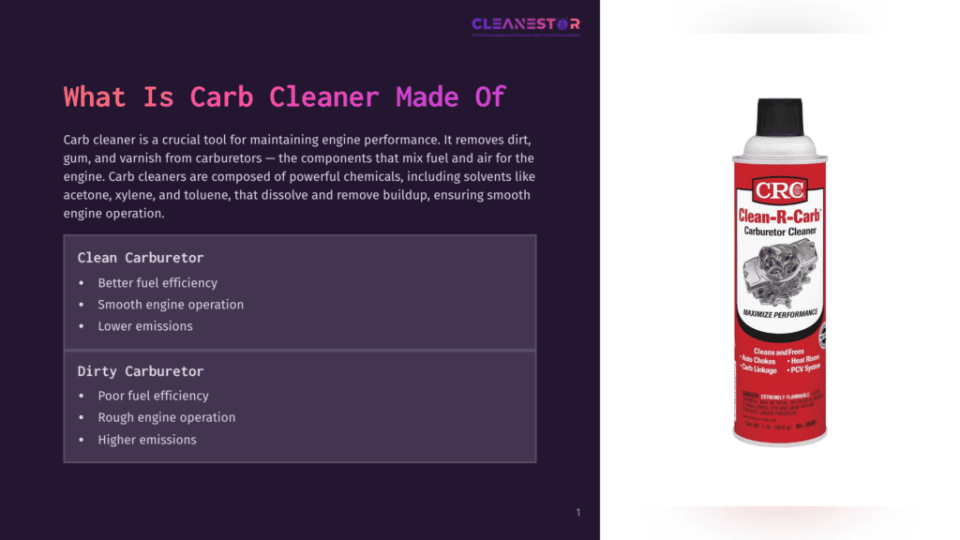

Introduction To Carb Cleaner
Carb cleaner is a vital product for maintaining a vehicle’s carburetor. The carburetor mixes fuel and air for the engine. Over time, it can get dirty and clogged. This is where carb cleaner comes in. It helps remove dirt, gum, and varnish. Understanding what carb cleaner is made of can help you use it better.
Purpose Of Carb Cleaner
Carb cleaner has one main purpose: cleaning the carburetor. It dissolves dirt and deposits. It also helps improve engine performance. Carburetors have small parts and passages. These can get blocked, causing problems. Carb cleaner reaches these small areas. It ensures everything is clean.
Importance In Maintenance
Regular maintenance is key for a healthy vehicle. Using carb cleaner is part of this. A clean carburetor ensures better fuel efficiency. It also helps in reducing emissions.
Carb cleaner is easy to use. It can save you from costly repairs. It extends the life of the carburetor. Here is a simple comparison of clean vs. dirty carburetor:
| Clean Carburetor | Dirty Carburetor |
|---|---|
| Better fuel efficiency | Poor fuel efficiency |
| Smooth engine operation | Rough engine operation |
| Lower emissions | Higher emissions |
Primary Ingredients
Understanding the primary ingredients in carb cleaner helps ensure effective cleaning. Carb cleaner is designed to remove dirt, gum, and varnish from carburetors. Knowing the ingredients can help in choosing the right cleaner for your needs. Let’s explore the key components.
Solvents
Solvents are the backbone of most carb cleaners. They dissolve deposits, making it easier to remove grime. Common solvents include acetone, toluene, and methanol. These chemicals break down tough residues quickly. They are potent and effective. Solvents are crucial for cleaning the inner parts of the carburetor.
- Acetone: Highly effective in dissolving grease and oil.
- Toluene: Known for breaking down varnish and gum.
- Methanol: Helps in evaporating quickly, leaving no residue.
Detergents
Detergents play a vital role in carb cleaners. They help in loosening and suspending dirt particles. This ensures that dirt can be easily wiped away. Common detergents used include surfactants and emulsifiers. These ingredients help in keeping the carburetor clean and functional.
- Surfactants: Reduce surface tension, allowing solvents to penetrate better.
- Emulsifiers: Keep oils and water mixed, aiding in thorough cleaning.
Both solvents and detergents are essential in a carb cleaner. They work together to ensure that the carburetor remains clean and efficient.
Common Solvents Used
Carb cleaner is a crucial tool for maintaining your vehicle’s carburetor. It removes built-up grime, dirt, and deposits. The effectiveness of carb cleaner comes from its powerful solvents. These solvents break down and dissolve contaminants, ensuring optimal performance. Below, we discuss some common solvents used in carb cleaners.
Acetone
Acetone is a widely used solvent in carb cleaners. It is effective at dissolving grease and oil. Acetone is a colorless, volatile, and flammable liquid. It evaporates quickly, leaving no residue. This makes it ideal for cleaning carburetors.
Acetone can penetrate and remove stubborn deposits. This includes varnish and gum that may form in the carburetor. It is also known for its ability to clean without causing corrosion.
Here are some key features of acetone:
- Highly effective solvent
- Evaporates quickly
- Leaves no residue
- Non-corrosive
Xylene
Xylene is another common solvent found in carb cleaners. It is a hydrocarbon solvent that dissolves a wide range of substances. Xylene is effective against heavy grease and dirt. It is also used to remove old fuel deposits.
Xylene is less volatile than acetone. This means it evaporates more slowly. This slower evaporation rate can provide more time for the solvent to work on tough deposits.
Key features of xylene include:
- Strong solvent for heavy grease
- Effective on old fuel deposits
- Slower evaporation rate
- Powerful cleaning action
Both acetone and xylene play vital roles in carb cleaners. They ensure your carburetor stays clean and functional.
Role Of Detergents
The role of detergents in carb cleaner is crucial. Detergents help in breaking down and removing deposits. These deposits can affect the performance of your carburetor. By understanding the components, you can see how they work.
Surfactants
Surfactants are key ingredients in carb cleaners. They reduce surface tension between substances. This allows the cleaner to spread and penetrate better. It reaches all the nooks and crannies of the carburetor. Surfactants help to dislodge stubborn dirt and grime.
Emulsifiers
Emulsifiers are another important component. They help to mix oil and water-based substances. This is essential for cleaning. Emulsifiers ensure that the cleaner can effectively remove both oil and water-based residues. They keep the cleaning solution stable and effective. Without emulsifiers, the cleaner wouldn’t work as well.
Additional Additives
Carb cleaner is essential for maintaining your engine’s performance. Beyond the primary ingredients, additional additives enhance its effectiveness. These additives offer unique benefits, ensuring your carburetor stays in top condition. Let’s explore two key additives: corrosion inhibitors and lubricants.
Corrosion Inhibitors
Corrosion inhibitors protect metal surfaces from rust and corrosion. These additives form a protective layer on the carburetor’s metal parts. This layer blocks moisture and other corrosive elements. As a result, your carburetor lasts longer and performs better.
Here are some common corrosion inhibitors found in carb cleaners:
- Benzotriazole
- Sodium nitrite
- Phosphates
Each of these compounds has its unique properties. Together, they ensure your carburetor remains rust-free.
Lubricants
Lubricants reduce friction between moving parts. This reduction in friction prevents wear and tear. Also, lubricants help in smooth operation of the carburetor. Without proper lubrication, your carburetor could seize up.
Lubricants in carb cleaners may include:
| Type | Benefits |
|---|---|
| Silicone oils | High heat resistance |
| PTFE (Teflon) | Low friction coefficient |
These lubricants ensure all components move smoothly. A well-lubricated carburetor means a more efficient engine.
Environmental Concerns
Carb cleaner is an essential product for vehicle maintenance. However, it poses significant environmental concerns. Understanding these concerns helps us use and dispose of carb cleaner responsibly.
Volatile Organic Compounds
Carb cleaners contain Volatile Organic Compounds (VOCs). VOCs are chemicals that evaporate quickly into the air. They contribute to air pollution and can harm human health.
Common VOCs in carb cleaners include:
- Acetone
- Toluene
- Methanol
These compounds can cause respiratory problems and other health issues.
Safe Disposal
Disposing of carb cleaner safely is crucial. Improper disposal can damage the environment.
Follow these guidelines for safe disposal:
- Never pour carb cleaner down the drain.
- Do not throw carb cleaner in regular trash.
- Take it to a local hazardous waste disposal facility.
Proper disposal prevents soil and water contamination. It also ensures the safety of wildlife and humans.
Choosing The Right Carb Cleaner
Choosing the right carb cleaner can be challenging. Different products suit different needs. Understanding what they are made of helps in making the right choice.
Compatibility With Materials
Not all carb cleaners are the same. Some can damage certain materials. Ensure the cleaner is safe for the carburetor’s material. Check the label for compatibility information. Aluminum and plastic parts need special consideration. Some cleaners contain strong chemicals. These can corrode or weaken sensitive parts. Always test on a small area first.
Application Methods
Carb cleaners come in various forms. Sprays are the most common. They are easy to use and reach tight spaces. Liquid cleaners may need to be soaked. They are good for thorough cleaning. Aerosol cans are handy for quick jobs. They provide a powerful spray. Choose the method that suits your needs. Follow the instructions carefully for best results.
DIY Carb Cleaner Alternatives
DIY carb cleaner alternatives offer a cost-effective and convenient way to maintain your engine’s performance. Many people prefer using homemade solutions to avoid the harsh chemicals found in commercial products. These alternatives can be made with common household items, making them accessible and easy to prepare.
Homemade Solutions
One popular homemade carb cleaner involves using a mixture of vinegar and baking soda. This combination helps break down grime and deposits without damaging the carburetor. Another effective solution is a blend of lemon juice and water. Lemon juice’s natural acidity can effectively clean and remove buildup.
Rubbing alcohol mixed with water is also a common DIY cleaner. It evaporates quickly and leaves no residue. Each of these solutions can be applied using a spray bottle for easy application.
Effectiveness And Risks
Homemade carb cleaners can be effective at removing dirt and deposits. They are gentle on your carburetor and environment-friendly. However, they may not be as powerful as commercial cleaners. Stubborn or heavy buildup might require multiple applications or a stronger cleaning agent.
There are risks involved with using DIY cleaners. The acidity in lemon juice can corrode metal if left too long. Vinegar, while mild, can cause damage over time. Always test a small area first and avoid prolonged exposure. Using these alternatives wisely can help maintain your carburetor without harsh chemicals.
Frequently Asked Questions
What Is Carb Cleaner Used For?
Carb cleaner is used to remove carbon deposits, varnish, and grime from carburetors. It ensures optimal engine performance and efficiency.
Is Carb Cleaner Safe To Use?
Yes, carb cleaner is generally safe when used as directed. Always follow the manufacturer’s instructions and use in a well-ventilated area.
Can Carb Cleaner Be Used On Other Parts?
Carb cleaner can sometimes be used on other engine parts. However, always check the product label for specific recommendations.
How Often Should You Use Carb Cleaner?
Use carb cleaner as part of regular maintenance. Typically, it’s used during tune-ups or when performance issues arise.
Conclusion
Carb cleaner is essential for maintaining engine performance. It contains solvents like acetone and toluene. These chemicals dissolve dirt and grime effectively. Regular use keeps your carburetor clean. Clean carburetors ensure smooth engine operation. Always handle carb cleaner with care.
Follow safety instructions for best results. Understanding its composition helps in choosing the right product. Happy cleaning and safe driving!
As an Amazon Associate, Cleanestor earns from qualifying purchases at no additional cost to you.