
Cleaning sprays are everywhere in our homes. But, are they acids or bases?
Understanding whether a cleaning spray is an acid or base can help you use it effectively. Acids and bases have different cleaning properties and uses. Acids can break down mineral deposits and rust, while bases are great for cutting through grease and grime.
Knowing the difference can help you choose the right product for your needs, making your cleaning tasks easier and more efficient. In this post, we will explore the nature of cleaning sprays, their chemical properties, and how to identify whether they are acidic or basic. This knowledge can not only improve your cleaning routine but also ensure you use these products safely. Stay tuned to learn more!
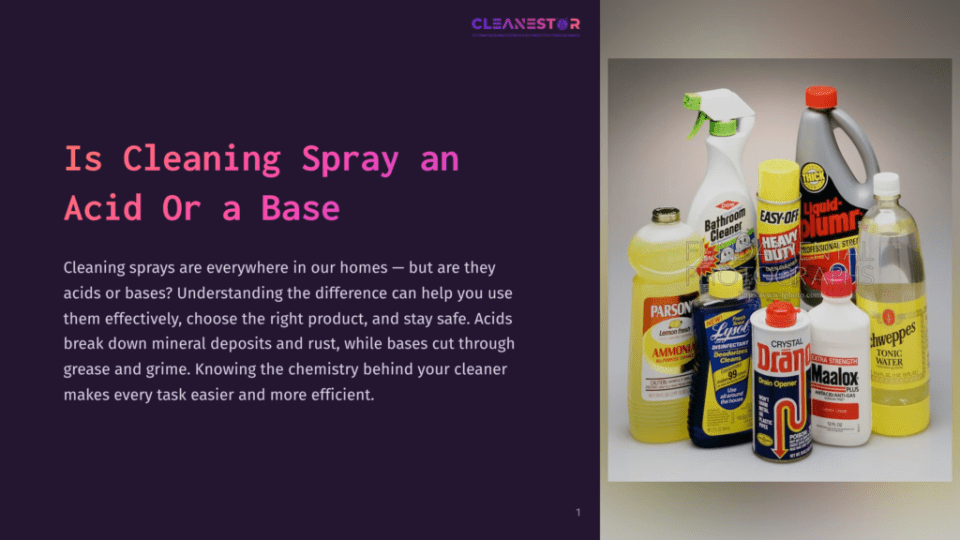

Introduction To Cleaning Sprays
Cleaning sprays are essential in maintaining cleanliness in homes and workplaces. They help remove dirt, grime, and germs from surfaces. These sprays come in different types, catering to various cleaning needs. Understanding their composition can help you use them effectively.
Some cleaning sprays are acidic, while others are basic. Knowing this difference is crucial. It determines how you should use them for the best results.
Common Uses
People use cleaning sprays for various tasks. They clean kitchen countertops, bathroom tiles, and windows. These sprays also help in disinfecting surfaces, making them safe. In offices, cleaning sprays are used on desks, keyboards, and phones. They are versatile and handy tools for everyday cleaning.
Importance In Daily Life
Cleaning sprays play a vital role in daily life. They make cleaning tasks easier and quicker. By using the right spray, you can keep your environment hygienic. This reduces the risk of illness and allergies. Clean spaces also create a pleasant living and working atmosphere. In short, cleaning sprays help maintain a healthy and inviting environment.
Chemical Composition
Cleaning sprays are common household items. Understanding their chemical composition can help us use them safely and effectively. Knowing whether they are acidic or basic is important for proper use.
Active Ingredients
Cleaning sprays often contain active ingredients that determine their acidity or basicity. Acids in cleaning sprays can dissolve mineral deposits. Vinegar and citric acid are common examples. They help remove limescale and soap scum.
Bases, on the other hand, break down grease and grime. Sodium hydroxide and ammonia are typical basic ingredients. They are effective in cleaning ovens and stovetops.
Role Of Surfactants
Surfactants are vital in cleaning sprays. They help to lift and remove dirt. Surfactants can be found in both acidic and basic cleaners. They work by reducing the surface tension of water.
This allows the cleaning solution to spread and penetrate grime. Surfactants also help to emulsify oils, making them easier to clean. This makes the cleaning process more efficient and effective.
Acidity And Basicity
Understanding the acidity and basicity of cleaning sprays is essential. These properties affect how well a cleaner works and its safety. The key lies in understanding the pH levels of these sprays. This knowledge helps you choose the right product for your needs.
Understanding PH Levels
The term pH stands for ‘potential of hydrogen.’ It measures how acidic or basic a substance is. The pH scale ranges from 0 to 14. A pH of 7 is neutral, like pure water. Values below 7 indicate acidity, while values above 7 indicate basicity.
PH Scale Explained
On the pH scale, each whole number change represents a tenfold change in acidity or basicity. For example, a substance with a pH of 4 is ten times more acidic than one with a pH of 5. Cleaning sprays can be either acidic or basic. Acidic cleaners often contain substances like vinegar or citric acid. These are great for removing mineral deposits and rust. Basic cleaners, on the other hand, often contain ammonia or baking soda. They are effective against grease and grime.
Knowing the pH of your cleaning spray can help you use it safely and effectively. Always check the label for pH information to ensure you’re using the right cleaner for the job.
Acidic Cleaning Sprays
Acidic cleaning sprays are commonly used for household cleaning tasks. They effectively remove dirt, grime, and stains from various surfaces. These sprays contain acids that help break down tough residues. Their powerful formula makes them ideal for many cleaning applications.
Common Acidic Ingredients
Acidic cleaning sprays often include ingredients like citric acid and acetic acid. Citric acid comes from citrus fruits and is excellent for removing limescale. Acetic acid, found in vinegar, is effective in cutting through grease and grime. Other common acids in these sprays are hydrochloric acid and sulfamic acid. Each of these acids serves a specific cleaning purpose, making the spray versatile.
Benefits Of Acidic Sprays
Acidic sprays offer several benefits for cleaning tasks. They efficiently dissolve mineral deposits and soap scum. Their strong acidic nature makes them perfect for bathroom and kitchen cleaning. These sprays also help in removing rust stains and hard water marks. By using acidic sprays, you can achieve a cleaner and more sanitary environment. Acidic sprays are also fast-acting, saving you time and effort in cleaning.
Basic Cleaning Sprays
Basic cleaning sprays are essential for everyday cleaning tasks. They effectively remove dirt, grease, and grime. These sprays are usually alkaline, meaning they have a higher pH level. They are great for cleaning surfaces without causing damage.
Common Basic Ingredients
Basic cleaning sprays often contain ingredients like baking soda, ammonia, or borax. These components are known for their strong cleaning power. They help break down tough stains and build-up. Another common ingredient is soap, which helps lift dirt from surfaces.
Some sprays include water and alcohol to dissolve dirt and grime. These ingredients work together to make cleaning easier and more effective.
Advantages Of Basic Sprays
Basic sprays offer several benefits. They are effective at removing grease and grime. This makes them ideal for kitchen use. They also work well on various surfaces, including countertops and tiles.
These sprays are generally safe for most materials. They do not cause corrosion or damage. This makes them versatile for household cleaning. Basic cleaning sprays are usually affordable and easy to find.
They are simple to use, requiring minimal effort. Just spray and wipe for a clean surface. Their efficiency and ease of use make them a popular choice for many households.

Credit: diyjayne.wordpress.com
Neutral Cleaning Sprays
Neutral cleaning sprays are popular for their balanced properties. They are neither too acidic nor too basic. This makes them safe for a variety of surfaces and materials. These sprays are perfect for everyday cleaning tasks.
Characteristics Of Neutral Sprays
Neutral cleaning sprays have a balanced pH level, close to 7. They do not react strongly with most surfaces. This ensures they do not cause damage or corrosion. Let’s look at some key characteristics:
- Gentle on Surfaces: They do not harm sensitive materials.
- Safe for Skin: Less likely to cause irritation.
- Versatile Use: Suitable for many cleaning tasks.
- Non-Toxic: Usually free from harsh chemicals.
Use Cases For Neutral Products
Neutral cleaning sprays are versatile. They can be used in many scenarios. Here are some common use cases:
- Kitchen Counters: Safe for food preparation areas.
- Bathroom Surfaces: Effective on tiles and sinks without damage.
- Electronics: Suitable for screens and keyboards.
- Furniture: Gentle on wood and fabric surfaces.
Using neutral sprays ensures a clean and safe environment. Their gentle nature makes them a favorite for everyday cleaning.
Safety Considerations
Cleaning sprays are a common household item. They often contain either acidic or basic chemicals. Understanding their safety considerations is crucial. Proper handling and storage, as well as awareness of potential health implications, are key to safe use.
Handling And Storage
- Always read the label: Check for specific handling instructions.
- Wear gloves: Protect your hands from harsh chemicals.
- Store in a cool, dry place: Avoid direct sunlight and extreme temperatures.
- Keep out of reach of children: Ensure safety for young ones.
- Use in well-ventilated areas: Prevent inhalation of fumes.
Health Implications
Cleaning sprays can have various health effects. Understanding these can help you stay safe.
| Health Issue | Possible Cause | Prevention |
|---|---|---|
| Skin Irritation | Direct contact with chemicals | Wear protective gloves |
| Respiratory Issues | Inhalation of fumes | Use in ventilated areas |
| Eye Irritation | Accidental splashes | Wear protective eyewear |
Be mindful of any allergies. Some ingredients can trigger allergic reactions. Always perform a patch test if you are unsure.
Choosing The Right Cleaning Spray
Choosing the right cleaning spray can be tricky. Not all sprays are the same. Some are acidic, while others are basic. Knowing the difference helps you clean better.
Factors To Consider
When picking a cleaning spray, consider these factors:
- Surface Type: Make sure the spray suits the surface. Some sprays may damage wood or stone.
- Purpose: Different sprays work best for different tasks. For example, degreasers for kitchens and disinfectants for bathrooms.
- Ingredients: Check the label. Avoid sprays with harsh chemicals if you have allergies.
Using the right spray makes cleaning easier and more effective.
Environmental Impact
Think about the environment too. Choose eco-friendly sprays. They are better for the planet.
Here are some tips:
- Biodegradable Ingredients: These break down naturally. They do not harm the environment.
- Non-toxic Formulas: Safe for you and your pets.
- Recyclable Packaging: Helps reduce waste. Look for sprays in recyclable bottles.
Caring for the environment is important. Small choices make a big difference.

Credit: technotes.alconox.com
Frequently Asked Questions
Is Cleaning Spray Acidic?
Many cleaning sprays are acidic. They contain ingredients like vinegar or citric acid. This helps remove mineral deposits and soap scum.
Are All Cleaning Sprays Bases?
No, not all cleaning sprays are bases. Some contain alkaline substances, but others are acidic or neutral.
How To Know If A Cleaning Spray Is Acidic?
Check the ingredients label. If it includes vinegar or citric acid, it’s likely acidic.
Can Acidic Sprays Damage Surfaces?
Yes, acidic sprays can damage certain surfaces. Always test a small area first. Follow manufacturer guidelines.
Conclusion
Cleaning sprays can be either acidic or basic. Always check the label. Acidic sprays work well on mineral deposits. Basic sprays are great for grease and grime. Know the pH to use the right product. Safety first, wear gloves and ventilate the area.
Understanding your cleaner makes a big difference. Clean smart and protect surfaces.
As an Amazon Associate, Cleanestor earns from qualifying purchases at no additional cost to you.