
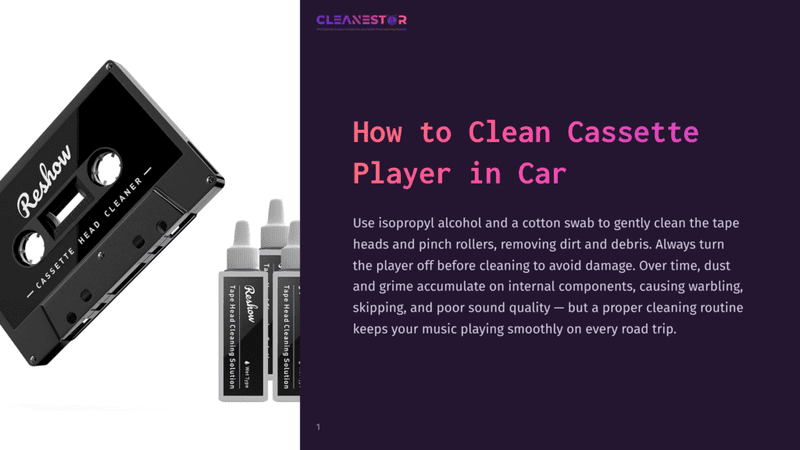
To clean a cassette player in a car, use isopropyl alcohol and a cotton swab to gently clean the tape heads and pinch rollers, removing any dirt or debris. Additionally, ensure the player is turned off before cleaning to avoid any damage.
Imagine you’re taking a long road trip, grooving to your favorite tunes, and suddenly the music starts warbling and skipping. It could be an indication that your cassette player in the car needs a good cleaning. Over time, dust, dirt, and debris can accumulate on the tape heads and pinch rollers, causing playback issues and poor sound quality.
We will guide you through the process of cleaning your cassette player in the car, ensuring you can once again enjoy your music without any interruptions. So, let’s dive in and learn how to clean a cassette player in your car effectively.

Identify The Problem
If you’ve been experiencing issues with your car’s cassette player, there are a few troubleshooting steps you can take to identify and fix the problem. By following these simple steps, you can hopefully get your cassette player back in working order and enjoy your favorite tunes once again.
To begin troubleshooting your cassette player, it’s important to first understand what the specific problem is. Here are a few common issues that may arise with cassette players in cars:
- No sound output: If you’re not hearing any sound when you play a cassette, there may be a problem with the audio output.
- Distorted or muffled sound: If the sound from your cassette player is distorted or muffled, there could be issues with the playback mechanism or the cassette itself.
- Cassette won’t play or eject: If your cassette player is not playing or ejecting the cassette, there may be mechanical issues or a misaligned cassette.
By identifying the problem, you can better troubleshoot and fix the issue. Let’s explore some possible solutions in the following sections.
Reasons For Malfunction
Some common reasons for cassette player malfunction in cars include dust accumulation, dirty cassette heads, a worn-out belt, or loose connections. To clean the cassette player, use a soft brush or a cleaning cassette to remove dust, clean the heads with rubbing alcohol and a cotton swab, and ensure all connections are secure to restore functionality.
Dust and debris accumulation:
- Dust and debris can accumulate inside the cassette player over time, causing various issues.
- Dust particles can interfere with the proper alignment of the cassette tape within the player.
- When dust accumulates on the playback heads, it can result in poor sound quality and even cause the tape to become stuck.
Worn-out cassette tapes:
- Worn-out cassette tapes can also contribute to the malfunction of a cassette player in a car.
- Frequent use and age can cause the tape to stretch, become loose, or even break.
- This can lead to problems such as distorted audio, inability to rewind or fast forward, and even jamming of the cassette player mechanism.
Note: Regular maintenance and cleaning of the cassette player and ensuring the use of good-quality cassette tapes can significantly reduce the chances of malfunction.
Cleaning The Cassette Player
To ensure the optimal functionality and longevity of your car’s cassette player, it’s essential to clean it regularly. Dust, dirt, and debris can accumulate over time, affecting the playback quality and potentially causing damage to the internal components. Follow these steps to clean your cassette player effectively:
Gather Necessary Tools And Materials
Before you begin the cleaning process, gather the following tools and materials:
- Soft, lint-free cloth
- Cotton swabs
- Isopropyl alcohol
- Compressed air canister
- Screwdriver (if necessary)
Remove The Cassette Player From The Car
If your cassette player can be easily removed from the dashboard, carefully detach it from its housing. Consult your car’s user manual for specific instructions on how to remove and reinstall the cassette player.
Disassemble The Cassette Player
Once the cassette player is removed, carefully disassemble it to gain access to the interior components. Keep track of the screws and small parts to ensure easy reassembly.
Clean The Exterior Of The Cassette Player
- Gently wipe the exterior surfaces of the cassette player using a soft, lint-free cloth.
- If there are stubborn stains or residue, dampen the cloth with isopropyl alcohol and wipe them away.
- Avoid using harsh chemicals or abrasive materials that may damage the cassette player’s finish.
Clean The Interior Components Of The Cassette Player
- Use a compressed air canister to blow away any loose debris and dust from the interior components. Hold the canister slightly away from the sensitive parts to prevent damage.
- Dip a cotton swab in isopropyl alcohol and carefully clean the playback heads, capstan, pinch roller, and other accessible areas. Gently remove any dirt or residue.
Lubricate The Moving Parts
Apply a small amount of silicone-based lubricant to the moving parts of the cassette player. This helps reduce friction and ensures smooth operation. Avoid excessive lubrication, as it can attract dirt.
Reassemble The Cassette Player
Once the cleaning and lubrication process is complete, reassemble the cassette player following the reverse order of disassembly. Make sure all the screws and parts are securely in place.
Test The Cassette Player
After reinstallation, test the cassette player to ensure it functions properly. Insert a cassette tape and play it to check for any issues, such as distorted sound or playback errors. If any problems persist, consult a professional for further assistance.
Regular cleaning of your car’s cassette player will help maintain its performance and extend its lifespan. Remember to clean it at least once every few months or whenever you notice a decline in playback quality. By following these simple steps, you can enjoy your favorite tapes with optimal clarity and reliability.
Cleaning The Cassette Tapes
Learn how to effectively clean your cassette player in the car by following simple steps. Keep your cassette tapes in top condition and enjoy uninterrupted music playback on the road.
Gather Necessary Tools And Materials
Before you begin cleaning your cassette tapes, make sure you have the following tools and materials ready:
- Soft, lint-free cloth
- Isopropyl alcohol
- Cotton swabs
- Cassette tape cleaner
Inspect The Cassette Tapes For Damage
Inspecting the cassette tapes for damage is crucial to ensure they can be safely cleaned and used without causing further damage to your cassette player.
- Examine each cassette tape carefully for any signs of damage, such as warping, cracks, or broken components.
- Check if the tapes are tangled or stuck inside the cassette player.
- Look for any signs of dirt or debris on the tape’s surface.
Clean The Cassette Tapes With A Cassette Tape Cleaner
Cleaning the cassette tapes with a cassette tape cleaner helps remove dust, dirt, and debris, enhancing the sound quality and prolonging the lifespan of the tapes.
- Apply a small amount of isopropyl alcohol to a soft, lint-free cloth.
- Gently wipe the entire length of the cassette tape, removing any dirt or debris.
- Use cotton swabs dipped in isopropyl alcohol to clean hard-to-reach areas, such as the cassette tape’s heads and rollers.
- Allow the cassette tape to air dry completely before inserting it back into the cassette player.
Remove Stubborn Dirt And Debris
Removing stubborn dirt and debris from the cassette tapes ensures optimal playback quality and prevents the accumulation of grime over time.
- If there are stubborn stains or sticky residue on the cassette tape, apply a small amount of isopropyl alcohol directly to the affected area.
- Gently rub the area with a cotton swab or soft cloth until the dirt or debris is removed.
- Be careful not to scrub too hard, as this may damage the cassette tape.
Store The Cassette Tapes Properly
Storing the cassette tapes properly helps maintain their quality and longevity. By following these storage guidelines, you can ensure that your cassette tapes are ready to use whenever you want to listen to your favorite music or audio recordings.
- Place the cassette tapes in their original cases or storage containers to protect them from dust, moisture, and direct sunlight.
- Ensure that the tape is fully rewound before storing it to prevent any tension or damage.
- Store the tapes in an upright position to avoid warping or bending.
Troubleshooting
If your cassette player in the car is acting up, there are a few troubleshooting steps to take before considering more drastic measures. Here’s what you can do to clean and fix your cassette player:
Reinstall The Cassette Player
- Start by removing the cassette player from the car. Refer to the car’s manual or consult a professional if you are unsure how to do this.
- Once you have removed the cassette player, carefully clean any dust or debris from the exterior using a soft, lint-free cloth. This will ensure a clean surface for reinstallation.
- Inspect the cassette player for any visible signs of damage or wear. Look for any loose components or cracked parts that may be causing the issue.
- Before reinstalling the cassette player, check the manual or do a quick online search to find specific instructions for your car model. This will help you ensure proper reinstallation.
- Once you have reinstalled the cassette player, test it by inserting a cassette tape and pressing play. Pay attention to any abnormal behavior or sound.
Check For Any Loose Connections
- If the cassette player is not functioning properly even after reinstalling, the next step is to check for any loose connections. Start by disconnecting the car battery to avoid any electrical accidents.
- Carefully inspect the wiring connected to the cassette player. Check for any loose or disconnected wires. Reattach any loose wires, ensuring they are securely connected.
- Additionally, check the wiring harness and connectors for any signs of damage. Replace or repair any damaged components.
Test The Cassette Player Again
- Once you have checked and reconnected any loose connections, reconnect the car battery.
- Test the cassette player again, this time playing multiple cassette tapes to ensure it is working properly. Pay attention to audio quality, tape movement, and any strange noises.
- If the cassette player is still not working as desired, it may be time to seek professional help or consider replacing the unit.
By following these troubleshooting steps, you can clean and fix your cassette player in the car, ensuring an enjoyable audio experience for your road trips. Remember to refer to the car’s manual for specific instructions and don’t hesitate to seek professional assistance if needed.
Preventive Maintenance
Regular preventive maintenance is crucial for keeping your car’s cassette player clean and in working condition. Follow these simple steps to clean your cassette player and ensure optimal performance.
Regularly Clean The Cassette Player
- Use a soft cloth or microfiber cloth to gently wipe the cassette player’s exterior, removing any dust and dirt.
- If the player has a cassette door, clean it using a cotton swab dipped in rubbing alcohol.
- Use a cassette head cleaner to clean the playback head, pinch roller, and capstan. Follow the instructions provided with the cleaner.
- Avoid using excessive force or harsh chemicals while cleaning, as this can damage the cassette player.
Store Cassette Tapes In A Cool And Dry Place
- Keep your cassette tapes away from direct sunlight, high temperatures, and humidity, as these factors can affect their quality and lifespan.
- Store the tapes in their original cases or in protective storage solutions to prevent them from getting tangled or damaged.
- Avoid storing cassette tapes in places such as the glove compartment or under car seats, as these areas can become hot and cause the tapes to warp or melt.
Avoid Leaving Cassette Tapes In The Car For Extended Periods
- Heat inside the car can cause the cassette tapes to deteriorate, affecting their sound quality and lifespan.
- Remove the cassette tapes from the car when not in use to reduce the risk of damage.
- If you must leave the tapes in the car, choose a shaded spot and crack the windows slightly to allow ventilation and prevent excessive heat buildup.
Regular cleaning and proper storage are essential for maintaining the performance and longevity of your car’s cassette player. By following these preventive maintenance tips, you can ensure that you enjoy uninterrupted and high-quality playback every time you use your cassette player.
So take a few minutes to clean the player and store your cassette tapes correctly, and you’ll be able to enjoy your favorite music on the road for years to come.
Frequently Asked Questions About How To Clean a Cassette Player In a Car
How Do You Clean The Inside Of A Cassette Tape?
To clean the inside of a cassette tape, gently remove the cassette shell and use a clean, soft cloth to wipe the tape heads and rollers.
Do Cassette Tapes Need Cleaning?
Yes, cassette tapes need cleaning to ensure optimal performance and prevent damage.
Why Is My Cassette Player Eating Tapes?
Your cassette player may be eating tapes due to worn-out rubber belts or dirty tape heads.
How Do You Lubricate A Cassette Player?
To lubricate a cassette player, gently apply a small amount of silicone-based lubricant to the moving parts.
Conclusion
Taking care of your cassette player in the car is essential to ensure its optimal performance and longevity. By following the step-by-step cleaning process mentioned in this blog post, you can effectively remove dust, dirt, and debris from your cassette player.
Regular cleaning not only improves the audio quality but also reduces the chances of any mechanical issues. Start by gathering the necessary cleaning supplies and then gently clean the cassette player using a soft cloth and a cleaning solution. Pay attention to the delicate parts, such as the read/write heads and pinch rollers.
Remember to handle them with care and avoid using excessive force. Cleaning your cassette player in the car might seem like a daunting task, but with the right approach and attention to detail, you can keep enjoying your favorite music hassle-free.
So, take some time out and ensure that your cassette player stays in top-notch condition for years to come.
As an Amazon Associate, Cleanestor earns from qualifying purchases at no additional cost to you.